


Supplement & Wellness Guides
Most people over 40 take supplements without knowing whether the form, dose, or timing actually matters. These guides are here to help.
Each article tackles a specific problem: poor sleep, low energy, bone health, gut health, or declining immunity. You’ll find what the research says, which supplement forms actually absorb, and whether something is worth taking in the first place.
Practical, evidence-based, written in plain English.
Magnesium Glycinate for Sleep: Dosage, Timing and What the Research Says

How much magnesium glycinate to take for sleep, when to take it, and what the research actually shows. Practical dosage guide for UK adults.
Dairy-Free Probiotic Drinks: What the Label Doesn’t Tell You

Are probiotics actually dairy-free? The answer depends on more than the label. Here’s what to check — and why the growth media matters as much as the ingredients.
Vitamin D with Zinc and Magnesium: Do You Actually Need All Three?

Taking vitamin D with zinc and magnesium makes biochemical sense. Here’s why all three nutrients work better together, and how much of each to take.
Best NAC Supplement UK: What to Look For (and What to Avoid)
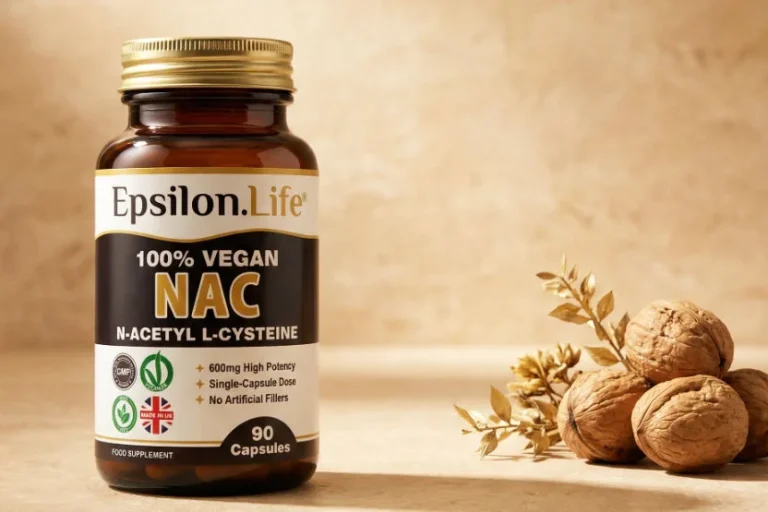
What to look for in a UK NAC supplement: dose, form, excipients, testing standards, and what the research says about getting it right.
NAC and Glutathione: How NAC Boosts Your Body’s Master Antioxidant

NAC is the most supported method to boost glutathione. Here’s how the mechanism functions — and why it surpasses taking glutathione directly.
Liposomal Glutathione: What It Is and Does It Actually Work?

Liposomal glutathione claims better absorption than standard supplements. We examine the evidence — and how it compares to NAC.
What Is the Gut Microbiome? How It Works and Why It Matters

Your gut contains trillions of microorganisms that shape immunity, mood and metabolism. Here’s what the research shows about keeping them healthy.
Lactobacillus Casei: What It Is, What It Does, and Where to Find It

Lactobacillus casei is the strain behind Yakult and Actimel — but there’s more to it than the marketing. Here’s what the clinical evidence shows about its benefits and uses.
Lactobacillus Rhamnosus: Benefits, Uses and What the Research Shows

Lactobacillus rhamnosus GG is one of the most researched probiotic strains in existence. Here’s what the evidence shows about its benefits, dosage, and how it works in the gut.