


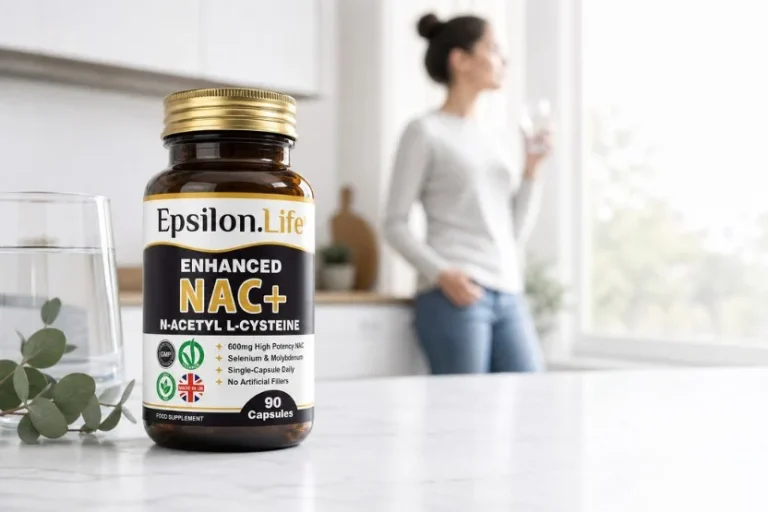
We have been selling our NAC 600mg capsules since we launched. The formula was deliberately simple: 600mg of N-acetyl cysteine, rice flour as a flow agent, and an HPMC capsule shell. Nothing else.
NAC+ did not start as a marketing decision. It started in the research. The more we read on how the body actually uses glutathione and clears sulphur, the more two nutrients kept appearing alongside NAC: selenium and molybdenum.
NAC+ is now available, replacing our original 600mg NAC formula. The NAC dose stays the same. What changes is the addition of two cofactors: selenium and molybdenum. This article explains what each ingredient does, why we added these two specifically, and what the science says about why they belong together.
If you want the background on why NAC matters in the first place, our article on NAC and glutathione covers the core mechanism. The short version: NAC is one of the most studied ways to support your body’s own glutathione levels, and glutathione is a key antioxidant your body makes itself.
Table of Contents
The base: NAC 600mg
Every capsule of NAC+ contains 600mg of N-acetyl cysteine. This is unchanged from the original formula and matches the doses used in most clinical research on NAC.
The NAC we use is derived from fermented non-GMO corn, not from chemical synthesis or animal-derived sources. This matters for vegan certification and product purity, as fermentation-derived amino acid compounds generally carry fewer process contaminants than their synthetic equivalents.
Why NAC rather than cysteine directly? Cysteine in its free form is unstable, poorly absorbed, and can be toxic at high doses. The acetyl group in NAC protects the cysteine molecule, stabilising it for oral delivery. Once absorbed, the acetyl group is cleaved and the cysteine is used for glutathione synthesis.
Glutathione is a tripeptide made from three amino acids: cysteine, glutamate, and glycine. In most people, glutamate and glycine are available in adequate supply. Cysteine is the rate-limiting precursor, which is why raising cysteine availability through NAC supports your body’s synthesis of glutathione. For more details on the glutathione synthesis pathway and what glutathione does, see our dedicated guide.
What we added: selenium
Each capsule of NAC+ contains 25mcg of selenium (45% of the Nutrient Reference Value).
Selenium is an essential trace mineral and a structural component of selenoproteins, a class of proteins that includes the glutathione peroxidase (GPx) family. This is where the connection to NAC becomes direct.
Glutathione peroxidases are the enzymes that use glutathione to neutralise hydrogen peroxide and lipid hydroperoxides. Without selenium, these enzymes cannot function. A selenium-deficient cell can have plenty of glutathione and still be unable to deploy it efficiently against oxidative stress, because GPx is inactive.
This is the key reason we added selenium to NAC+. NAC raises the amount of glutathione your body synthesises. Selenium ensures the enzymes that actually use that glutathione are functional. The two work at different points in the same pathway.
Selenium deficiency is more common than most people assume. UK soil is low in selenium compared to North American soil, which means UK crops and livestock contain less. Data from the National Diet and Nutrition Survey shows that a significant proportion of UK adults have selenium intakes below recommended levels. This is particularly relevant for anyone not eating oily fish, Brazil nuts, or organ meats regularly.
The form we use is L-selenomethionine, an organic form of selenium in which the mineral is bound to the amino acid methionine. Selenomethionine is absorbed through active amino acid transport pathways in the small intestine, giving it significantly higher bioavailability than inorganic forms such as sodium selenite. At 25mcg per capsule, the dose is within the EU NRV and well below the safe upper level of 300mcg per day established by the Expert Group on Vitamins and Minerals.
What we added: molybdenum
Each capsule of NAC+ contains 45mcg of molybdenum (90% of the Nutrient Reference Value).
Molybdenum is a trace mineral that functions as a cofactor for a small group of enzymes, the most relevant here being sulfite oxidase.
NAC is a sulfur-containing compound. When it is metabolised, sulfite is one of the byproducts. Sulfite oxidase converts sulfite to sulfate, which is water-soluble and safely excreted. Without adequate molybdenum, this conversion is impaired and sulfite can accumulate.
Most people process sulfites without issue. But for some individuals, particularly those who are sensitive to sulphites in food and drink (wine, dried fruit, processed meats), NAC supplementation can trigger headaches, brain fog, or fatigue. This is not a reaction to NAC itself but to impaired sulfite clearance.
Adding molybdenum addresses this directly. It supports the enzyme responsible for clearing the sulfite byproducts of NAC metabolism, making the formula better tolerated across a wider range of people.
Molybdenum deficiency in isolation is rare, but molybdenum status varies with diet and it is frequently absent from standard multivitamins. Including it in a sulfur-containing supplement formula is a logical step that most supplement brands overlook entirely.
Why these three together
NAC, selenium, and molybdenum address three distinct points in the same metabolic chain:
- NAC provides the cysteine your body needs to synthesise glutathione
- Selenium activates the glutathione peroxidase enzymes that use glutathione to neutralise oxidative stress
- Molybdenum supports the clearance of sulfite byproducts from NAC metabolism, improving tolerability
None of these interactions is theoretical. Each is grounded in established biochemistry. The reason most supplement brands do not include all three is cost and formulation complexity, not science. For a deeper look at how glutathione functions within this system, see our article on glutathione and what the research shows.
What is not in it
The full ingredient list for NAC+: N-acetyl-L-cysteine (vegan), brown rice flour, L-selenomethionine, sodium molybdate dihydrate, hypromellose (capsule shell). That is everything. Here is what you will not find:
- No artificial fillers or binders
- No magnesium stearate
- No titanium dioxide
- No artificial colours or flavours
- No sweeteners or preservatives
- No lactose, soya, gluten, wheat, or yeast
- No porcine-derived ingredients
The brown rice flour is a natural flow agent that ensures consistent capsule filling. It contributes no active ingredients. The hypromellose (HPMC) capsule shell is plant-derived, making the entire product suitable for vegetarians and vegans. This is certified by an independent certifying body, not self-declared.
Testing and quality
NAC+ is manufactured in the UK to GMP (Good Manufacturing Practice) standards.
The product is vegan-certified. The supply chain from raw materials to finished capsule has been independently verified. The NAC is derived from fermented non-GMO corn, not from animal-derived sources.
How to take it
Take one capsule daily. NAC+ is a one-a-day formula. Each bottle contains 90 capsules, which is a three-month supply.
NAC is best taken away from food, as directed on the label. If you find it causes nausea on a completely empty stomach (uncommon but possible), taking it shortly before a meal rather than first thing in the morning can help.
Timing is flexible. Morning or evening both work. If you are also taking our Magnesium Glycinate in the evening, taking NAC+ in the morning is a simple way to separate them and align each supplement with its optimal context.
NAC can interact with nitroglycerin, activated charcoal, and certain antibiotics. If you take any prescription medications, check with your GP or pharmacist before starting supplementation.
Who is this for
NAC+ is designed for adults looking for a clean, well-formulated N-acetyl cysteine supplement that supports the glutathione pathway, not just one step of it. It is particularly relevant for:
- People who have taken plain NAC before and want a more complete formula
- Anyone who wants the selenium and molybdenum cofactors alongside their NAC, rather than NAC on its own
- People who have experienced headaches or fatigue with other sulfur-containing supplements
- Anyone who knows their selenium intake from diet is likely low (common in the UK)
It is not appropriate for people with kidney disease without medical supervision, as NAC can affect cystine excretion. Anyone with a known selenosis history or taking selenium-containing medications should check with their GP first.
For a broader overview of NAC and the form we use, see our NAC supplement guide.
Frequently asked questions
What is the difference between NAC and NAC+?
Our original NAC supplement contains 600mg of N-acetyl cysteine per capsule with no additional active ingredients. NAC+ is our updated formula, which keeps the same 600mg NAC dose but adds selenium and molybdenum as cofactors. Selenium activates the glutathione peroxidase enzymes that use the glutathione NAC helps produce. Molybdenum supports clearance of sulfite byproducts from NAC metabolism. The two formulas address different points in the same biochemical pathway.
Why did you add selenium to NAC?
Glutathione is only as useful as the enzymes that deploy it. Glutathione peroxidase, the enzyme family responsible for using glutathione to neutralise oxidative damage, is selenium-dependent. Without adequate selenium, these enzymes are inactive, regardless of how much glutathione your body has. Adding selenium ensures the full NAC-to-glutathione-to-GPx chain is supported, not just the first step. For more on the glutathione pathway, see our article on NAC and glutathione.
Why molybdenum specifically?
NAC is a sulfur-containing compound. Its metabolism generates sulfite as a byproduct, which is normally converted to sulfate by the molybdenum-dependent enzyme sulfite oxidase. Without adequate molybdenum, sulfite clearance is impaired, which can cause symptoms in sulfite-sensitive individuals. Adding molybdenum makes NAC supplementation better tolerated, particularly for people who have previously experienced headaches or brain fog from NAC or other sulfur-containing supplements.
Is NAC+ still vegan?
Yes. The capsule shell is HPMC (plant-derived), the NAC is sourced from fermented non-GMO corn, and the selenium is L-selenomethionine (an organic amino acid form) and the molybdenum is sodium molybdate. The product is independently vegan-certified.
What dose of NAC+ should I take?
One capsule per day, taken away from food. NAC+ is a one-a-day formula. The 600mg NAC dose is consistent with the amounts commonly used in clinical research on NAC.
Can I take NAC+ with other supplements?
NAC+ is designed to complement our other products. It pairs well with our Vitamin D3 + K2 (take in the morning alongside NAC+) and our Magnesium Glycinate (take in the evening). If you are taking any prescription medications, particularly nitroglycerin or activated charcoal, consult your GP or pharmacist first.
Is NAC+ available now?
Yes. NAC+ is available now from the product page, replacing our original NAC 600mg formula at the same price. It is also available on Amazon UK.
Why does the NAC dose stay at 600mg?
600mg is the dose with the most clinical backing. Studies on NAC consistently used doses in the 600mg to 1800mg per day range, with 600mg once daily being the most common single-dose protocol. Rather than reduce the NAC dose to fit in the cofactors, we kept it at 600mg and added selenium and molybdenum at their respective effective doses without compromise.
Are there any side effects of taking NAC with selenium and molybdenum?
At the doses in NAC+ (600mg NAC, 25mcg selenium, 45mcg molybdenum), side effects are uncommon. NAC can occasionally cause mild nausea or gastrointestinal discomfort, which is usually resolved by adjusting timing relative to meals. The selenium dose is 45% of the NRV and well below the safe upper level of 300mcg per day set by the Expert Group on Vitamins and Minerals. The molybdenum dose is 90% of the NRV and also well within safe limits. If you take prescription medications, particularly nitroglycerin, activated charcoal, or certain antibiotics, check with your GP before starting NAC supplementation.
Should I take NAC or glutathione directly?
NAC is a precursor to glutathione: it provides the rate-limiting amino acid (cysteine) your body needs to synthesise glutathione itself. Oral glutathione supplements face a bioavailability problem, as glutathione is a tripeptide that is largely broken down in the gut before it reaches the bloodstream. NAC lets your body build glutathione intracellularly, where it is actually used. This is why research on raising glutathione levels has predominantly used NAC rather than oral glutathione. For a full comparison, see our article on NAC and glutathione.
Why is selenium particularly important for people in the UK?
UK soil is naturally low in selenium compared to North American and some Asian soils, which means crops grown in the UK, and livestock fed on UK-grown feed, contain less selenium. Data from the National Diet and Nutrition Survey shows that a significant proportion of UK adults have selenium intakes below recommended levels. Unless you regularly eat Brazil nuts, oily fish, or organ meats, your dietary selenium intake may be insufficient to fully support selenium-dependent enzymes like glutathione peroxidase.
What form of selenium is used in NAC+ and why?
NAC+ uses L-selenomethionine, an organic form of selenium in which the mineral is bound to the amino acid methionine. This form is absorbed through active amino acid transport pathways in the small intestine, giving it significantly higher bioavailability than inorganic forms like sodium selenite. Selenomethionine can also be incorporated into body proteins as a selenium reserve, providing a more sustained supply than inorganic selenium salts.
References
- Atkuri KR, Mantovani JJ, Herzenberg LA, Herzenberg LA. N-Acetylcysteine: a safe antidote for cysteine/glutathione deficiency. Current Opinion in Pharmacology. 2007;7(4):355-359. doi:10.1016/j.coph.2007.04.005
- Brigelius-Flohe R, Maiorino M. Glutathione peroxidases. Biochimica et Biophysica Acta. 2013;1830(5):3289-3303. doi:10.1016/j.bbagen.2012.11.020
- Rayman MP. Selenium and human health. The Lancet. 2012;379(9822):1256-1268. doi:10.1016/S0140-6736(11)61452-9
- Schwarz G, Mendel RR, Ribbe MW. Molybdenum cofactors, enzymes and pathways. Nature. 2009;460(7257):839-847. doi:10.1038/nature08302
- Public Health England. National Diet and Nutrition Survey: Results from Years 9 to 11. 2020. gov.uk
- Expert Group on Vitamins and Minerals. Safe Upper Levels for Vitamins and Minerals. Food Standards Agency. 2003.
- Rayman MP. The importance of selenium to human health. The Lancet. 2000;356(9225):233-241. doi:10.1016/S0140-6736(00)02490-9
This article is for informational purposes only and does not constitute medical advice. If you have a medical condition or take prescription medication, speak with your GP or a qualified healthcare practitioner before starting supplementation.
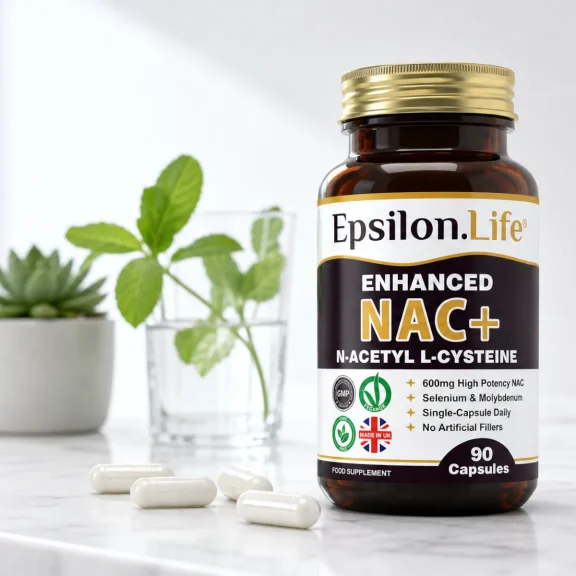
View our NAC+: N-Acetyl Cysteine 600mg with Selenium and Molybdenum — 600mg NAC, 25mcg selenium (L-selenomethionine), 45mcg molybdenum per capsule. 90 vegan capsules, one-a-day. No artificial fillers or binders. Vegan-certified, GMP certified, made in the UK. Also available on Amazon UK.
Find our guides useful? Add Epsilon Life as a preferred source on Google to see more of them in your search results.
Add to Google preferred sources