


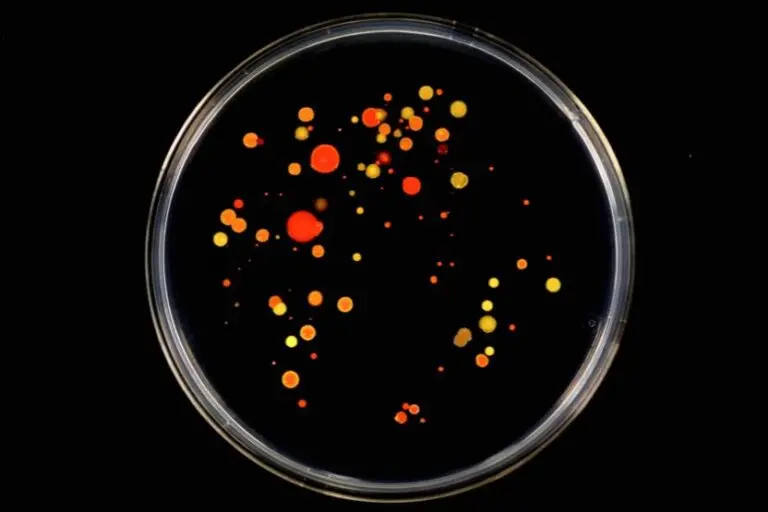
Saccharomyces boulardii is one of the most studied probiotic organisms in existence — and one of the most misunderstood.
It’s not a bacterium. It’s a yeast, and that distinction matters. Unlike bacterial probiotics, S. boulardii is naturally resistant to antibiotics, which is precisely why it’s useful during antibiotic treatment. It survives where most other probiotics cannot.
Here’s what the research actually shows about how it works, what it helps with, and how to use it.
What Is Saccharomyces boulardii?
Saccharomyces boulardii is a non-pathogenic yeast originally isolated from lychee and mangosteen fruit in Southeast Asia in the 1920s by French scientist Henri Boulard. It was later developed into a probiotic after Boulard noticed that local populations used the fruit’s skin to manage cholera-related diarrhoea.
It is closely related to Saccharomyces cerevisiae (baker’s yeast) but behaves differently in the gut. S. boulardii is a transient organism — it doesn’t permanently colonise the gut, but it exerts significant effects during the time it’s present.
Its most important property is antibiotic resistance. Antibiotics target bacteria, not yeast, which means S. boulardii remains active and effective even when taken alongside a course of antibiotics — something bacterial probiotics cannot claim.
How S. boulardii Works in the Gut
Once swallowed, S. boulardii survives stomach acid and reaches the intestines largely intact — an advantage over many bacterial strains that are partially degraded in transit.
In the gut, it operates through several mechanisms. It competes with harmful bacteria and pathogens for attachment sites on the intestinal lining, making it harder for them to establish. It also strengthens the intestinal barrier by stimulating the production of secretory immunoglobulin A (sIgA) — an antibody that acts as the gut’s first line of immune defence.
Additionally, S. boulardii stimulates digestive enzyme production and modulates the gut’s immune response, reducing inflammation without suppressing immune function broadly.
Benefits of Saccharomyces boulardii
Antibiotic-associated diarrhoea
This is the most well-evidenced application. Antibiotics disrupt the gut microbiome, often causing diarrhoea as collateral damage. Because S. boulardii is a yeast and therefore unaffected by antibiotics, it can be taken concurrently to help maintain gut stability.
A meta-analysis published in Alimentary Pharmacology & Therapeutics (Szajewska & Kolodziej, 2015), covering 21 randomised controlled trials, found that S. boulardii significantly reduced the risk of antibiotic-associated diarrhoea in both adults and children. An earlier systematic review in the World Journal of Gastroenterology (McFarland, 2010) of 31 trials reached similar conclusions.
The evidence here is robust by probiotic standards — multiple trials, consistent direction of effect.
Traveller’s diarrhoea
Traveller’s diarrhoea is typically caused by exposure to unfamiliar bacteria in food and water, particularly E. coli strains. S. boulardii has been studied as a preventive measure, with some trials showing a modest but meaningful reduction in incidence when taken before and during travel.
The evidence is less definitive than for antibiotic-associated diarrhoea, but S. boulardii is among the better-studied options for this purpose.
H. pylori support
Helicobacter pylori is a bacterium that colonises the stomach lining and is associated with gastric ulcers and chronic gastritis. Standard treatment involves a course of antibiotics (known as eradication therapy), which can be harsh on the gut.
Several clinical trials have found that adding S. boulardii to H. pylori eradication therapy reduces the gastrointestinal side effects of treatment — particularly nausea and diarrhoea — without interfering with antibiotic efficacy. A meta-analysis in the World Journal of Gastroenterology (Szajewska et al., 2015) confirmed this effect across multiple trials.
Irritable bowel syndrome (IBS)
S. boulardii has been studied in IBS, with mixed but generally positive results. Its anti-inflammatory properties and ability to reduce intestinal permeability are the likely mechanisms.
A study published in Digestive Diseases and Sciences (Choi et al., 2011) found that S. boulardii improved overall IBS symptoms and quality of life compared to placebo. The evidence is not as consistent as for antibiotic-associated diarrhoea, but it remains a reasonable option for people with IBS who want to trial a probiotic.
Candida and thrush
There is some evidence that S. boulardii may help suppress Candida overgrowth in the gut. It competes with Candida albicans for space and nutrients and may inhibit its adhesion to the intestinal lining.
The evidence base here is smaller and less definitive than for diarrhoea conditions. S. boulardii should not be used as a standalone treatment for systemic Candida infections, and anyone with a diagnosed Candida overgrowth should seek medical advice. However, as a supportive measure alongside appropriate treatment, it may offer some benefit.
Post-antibiotic microbiome recovery
One counterintuitive finding worth noting: a study published in Cell (Suez et al., 2018) found that taking standard probiotic supplements immediately after antibiotics actually delayed microbiome recovery compared to no supplementation. However, S. boulardii was not included in that study’s probiotic regimen — the finding applied to bacterial probiotics, not yeast-based ones.
The distinction matters. S. boulardii‘s transient, non-colonising behaviour may make it better suited for the post-antibiotic period than bacterial probiotics that attempt to establish long-term residence.
Dosage and How to Take It
Most clinical trials have used doses of 250–500mg daily, typically taken two to four times per day. Some protocols use up to 1g per day for more acute conditions.
For antibiotic-associated diarrhoea prevention, begin taking S. boulardii at the same time as the antibiotic course and continue for at least two weeks after completing antibiotics.
For general gut support, 250–500mg daily is typical. As with most supplements, starting at a lower dose to assess tolerance before increasing is sensible.
S. boulardii can be taken with or without food. Unlike most bacterial probiotics, it does not require refrigeration — the yeast is heat-stable — though storage conditions vary by product.
Side Effects and Safety
S. boulardii is generally well tolerated. The most commonly reported side effects are mild and transient: bloating and gas as the gut adjusts, particularly in the first few days.
There are two groups for whom caution is warranted. People who are severely immunocompromised — including those on immunosuppressive therapy or with central venous catheters — should avoid S. boulardii and all live probiotic supplements without first consulting their doctor, as there is a small risk of fungaemia (yeast entering the bloodstream) in this population.
Anyone with a confirmed yeast allergy should also avoid S. boulardii.
For healthy adults, the safety record across decades of clinical use is reassuring.
What to Look For in an S. boulardii Supplement
- Strain identified: The product should list Saccharomyces boulardii as an active ingredient, ideally with the strain designation (CNCM I-745 is the most clinically studied).
- Live cultures confirmed: Check that the product guarantees viable organisms at time of use, not just at manufacture.
- No unnecessary additives: Fillers, artificial sweeteners, and synthetic binders add nothing and may counteract the gut health benefit.
- Transparent labelling: The CFU (colony-forming units) count should be stated clearly.
S. boulardii is one of the six probiotic strains in Biome Bliss, our naturally fermented gut health supplement. For a broader overview of the strains in Biome Bliss and what each one does, see our guide to probiotic strains in Biome Bliss.
Frequently Asked Questions
What is Saccharomyces boulardii used for?
S. boulardii is most commonly used to prevent antibiotic-associated diarrhoea, manage traveller’s diarrhoea, support H. pylori eradication therapy, and improve symptoms of IBS. It is a yeast-based probiotic, making it unique in its ability to remain active during antibiotic treatment.
Can I take S. boulardii with antibiotics?
Yes — this is one of its primary advantages. Because it is a yeast rather than a bacterium, antibiotics do not affect it. Taking S. boulardii alongside antibiotics may help reduce the risk of antibiotic-associated diarrhoea. Continue for at least two weeks after completing the antibiotic course.
What are the side effects of Saccharomyces boulardii?
Side effects are generally mild. Some people experience bloating or gas when first starting, which typically resolves within a few days. Immunocompromised individuals should consult a doctor before use, as there is a small risk of fungaemia in this population.
How long does it take for S. boulardii to work?
For acute conditions like antibiotic-associated diarrhoea, effects can be noticeable within a few days. For ongoing gut health support, most trials use intervention periods of two to four weeks before assessing outcomes.
Is S. boulardii good for Candida?
There is some evidence that S. boulardii may inhibit Candida overgrowth in the gut by competing for attachment sites. The evidence is less robust than for diarrhoea applications. Anyone with a diagnosed Candida infection should seek medical advice rather than relying on supplementation alone.
References
- Szajewska H & Kolodziej M (2015). Systematic review with meta-analysis: Saccharomyces boulardii in the prevention of antibiotic-associated diarrhoea. Alimentary Pharmacology & Therapeutics, 42(7), 793–801. pubmed.ncbi.nlm.nih.gov/26216624
- McFarland LV (2010). Systematic review and meta-analysis of Saccharomyces boulardii in adult patients. World Journal of Gastroenterology, 16(18), 2202–2222. pubmed.ncbi.nlm.nih.gov/20458757
- Szajewska H et al. (2015). Saccharomyces boulardii CNCM I-745 in the prevention of antibiotic-associated diarrhoea in children. Journal of Pediatric Gastroenterology and Nutrition, 61(1), 51–57. pubmed.ncbi.nlm.nih.gov/25591123
- Suez J et al. (2018). Post-antibiotic gut mucosal microbiome reconstitution is impaired by probiotics and improved by autologous FMT. Cell, 174(6), 1406–1423. pubmed.ncbi.nlm.nih.gov/30193113
This article is for informational purposes only and does not constitute medical advice. If you are experiencing digestive symptoms, please consult a GP or registered healthcare professional.