

Antibiotics save lives, but they leave your gut microbiome in a state that can take months to fully recover
If you’ve just finished a course of antibiotics, your gut is probably not in great shape. Antibiotics don’t distinguish between harmful bacteria and the beneficial ones your digestive system relies on. The result is a temporary but significant disruption to your gut microbiome, the community of trillions of microorganisms that supports your immunity, digestion and mood.
The good news: your gut can recover. But how quickly and completely that happens depends largely on what you do during and after the course. Here’s what the research actually shows about how to restore gut health after antibiotics, and where the common advice gets oversimplified.
What Antibiotics Do to Your Gut Bacteria
Antibiotics are designed to kill bacteria. The problem is they’re not particularly selective about which ones they target.
A 2018 study in Nature Microbiology (Palleja et al.) tracked 12 healthy adults after a four-day course of three broad-spectrum antibiotics. The initial effects were severe: beneficial species like Bifidobacterium were wiped out, while potentially harmful bacteria like Enterococcus faecalis and Fusobacterium nucleatum bloomed to fill the gaps.
Most of the microbiome returned to near-baseline levels within six weeks. But nine species that had been present in every single participant before treatment were still undetectable after six months.
Your gut is resilient, but antibiotics can cause lasting gaps in its bacterial community. This is particularly relevant if you’ve had multiple courses over time, as each round compounds the damage. Understanding how to heal your gut after antibiotics starts with knowing what you’re actually recovering from.
For a fuller picture of what the gut microbiome does and why diversity matters, see our overview.
The Probiotic Question: It Depends What You’re Trying to Prevent
The instinct after antibiotics is to reach for a probiotic supplement. It seems logical: replace the bacteria that were killed. But the research tells a more nuanced story, because two different studies are often conflated into a single answer. Probiotics measured against two different goals give two different verdicts.
Goal 1: Preventing diarrhoea during the antibiotic course
Here the evidence is strong and consistent. A 2017 Cochrane review (Goldenberg et al.) of 31 randomised trials with over 8,000 participants found that probiotics taken alongside antibiotics reduced the risk of Clostridioides difficile-associated diarrhoea by around 60% (relative risk 0.40). The strains with the strongest evidence are Saccharomyces boulardii and Lactobacillus rhamnosus GG.
S. boulardii is particularly well-suited to this stage because it’s a yeast rather than a bacterium, so antibiotics don’t kill it. It can pass through the gut alongside the antibiotic without being destroyed. Practical guidance from clinical trials is to take it a few hours apart from each antibiotic dose, starting on day one of the course and continuing for one to two weeks afterwards.
This matters most if you’re older, on a broad-spectrum antibiotic, taking the antibiotic for an extended period, or have a history of digestive issues following previous courses.
Goal 2: Rebuilding long-term microbiome diversity after the course
Here the picture is more complicated. A 2018 study in Cell (Suez et al.) directly tested standard multi-strain probiotic supplements taken after antibiotics. Compared to a control group that recovered naturally, the probiotic group showed significantly delayed and incomplete microbiome recovery. The probiotic strains colonised the gut rapidly and occupied space and resources that the original, more diverse bacterial community needed to re-establish.
These two findings are not contradictory. They measure different things over different timeframes: short-term clinical symptoms versus long-term microbial ecology. The practical takeaway is that the purpose and format of probiotic support both matter, and the right answer is probably different during the course versus after it.
How to Heal Your Gut After Antibiotics: What the Research Supports
Restoring gut health after antibiotics isn’t about a single supplement or food. The research points to a combination of dietary and lifestyle strategies, with the choice of probiotic support depending on which stage you’re in.
Increase fibre, especially prebiotic fibre
Fibre is the primary fuel source for beneficial gut bacteria. Without it, the species you most want to recover simply can’t regrow.
A 2023 study in Nature Communications (Oliver et al.) found that fibre supplementation during and after antibiotic treatment significantly protected microbiome diversity by modulating gut redox potential. In practical terms, fibre keeps the gut environment oxygen-balanced enough for anaerobic bacteria to survive.
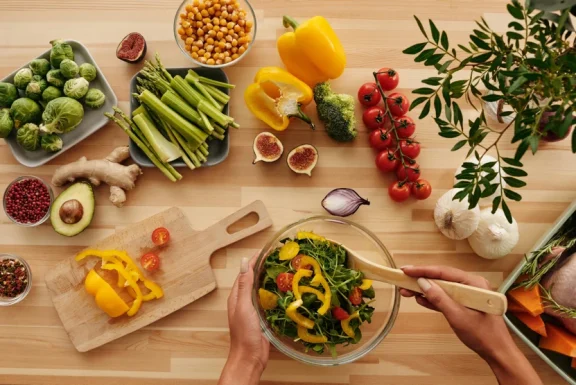
Prebiotic fibres are particularly effective. These are found in garlic, onions, leeks, asparagus, bananas, oats, and Jerusalem artichokes. They selectively feed beneficial bacteria like Bifidobacterium and Lactobacillus, precisely the species most affected by antibiotics.
The NHS recommends 30g of fibre per day. The average UK adult manages about 18g. After antibiotics, closing that gap matters more than usual.
Add fermented foods daily
Fermented foods don’t just deliver live bacteria. They change the gut environment itself, making it more hospitable to the diverse bacterial community you’re trying to restore.
A 2021 Stanford study in Cell (Wastyk et al.) found that a high-fermented-food diet significantly increased microbiome diversity and reduced 19 inflammatory proteins over ten weeks. The effect was greater than that of a high-fibre diet alone, though both matter.
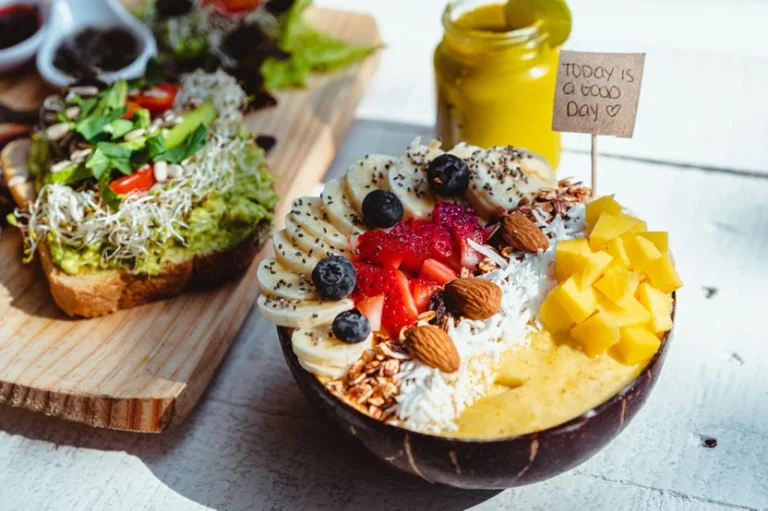
Aim for one to two servings daily: yoghurt with live cultures, kefir, kimchi, sauerkraut, or kombucha. Consistency over weeks matters far more than large occasional amounts. If you’re avoiding dairy, see our guide to dairy-free probiotic drinks.
Choose the right type of probiotic support — and match it to the stage
Given the Cochrane evidence on diarrhoea prevention and the Suez findings on long-term recovery, the format and timing of probiotic support should match what you’re trying to achieve.
During the antibiotic course: the strongest randomised evidence supports Saccharomyces boulardii (typically 250–500 mg twice daily) or Lactobacillus rhamnosus GG (around 10 billion CFU daily), taken a few hours apart from each antibiotic dose.
After the course, for rebuilding diversity: a naturally fermented supplement, where bacterial strains are cultured within a fermented base rather than freeze-dried into a capsule, may more closely mirror the mechanism of fermented food. If you’ve started a probiotic and want to know what improvement actually looks like, and how soon to expect it, see our guide to signs probiotics are working. The fermented matrix delivers organic acids, postbiotics, and a broader microbial environment alongside the live cultures. This approach hasn’t been directly tested against capsule probiotics in a randomised trial, but it more closely resembles the food-based interventions (like the Wastyk fermented-food study) that have been shown to support diversity.
Other strains with supporting evidence for post-antibiotic use include Lactobacillus plantarum. If your antibiotic course was for H. pylori eradication (triple therapy), the protocol and strain selection differs. See our dedicated guide to probiotics after H. pylori treatment for specific recommendations.
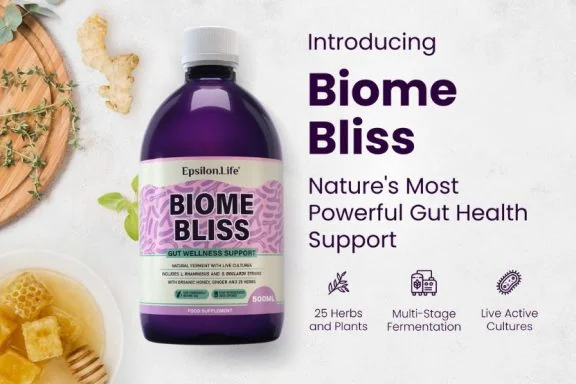
Our Biome Bliss supplement contains five research-supported strains fermented in organic honey and apple juice with 25 organic herbs. It’s designed for the rebuilding stage rather than as a replacement for clinical-evidence strains during the course itself.
Cut back on what slows recovery
What you remove from your diet matters too. Ultra-processed foods, artificial sweeteners, and excess alcohol can all disrupt the microbiome and slow the recolonisation process.
Research in Cell (Suez et al., 2022) found that commonly used artificial sweeteners altered gut bacteria composition in ways associated with glucose intolerance. For a detailed breakdown, see our post on worst foods for gut health.
A Practical Recovery Timeline
Recovery isn’t instant, but it does follow a rough pattern based on the available research.
During the course: If you’re at higher risk of antibiotic-associated diarrhoea, this is the window where S. boulardii or L. rhamnosus GG has the best evidence. Stay well hydrated and don’t skip meals.
Weeks 1–2 post-course: The most disrupted phase. Bloating, loose stools, and digestive discomfort are common. If you’re unsure whether what you’re experiencing is antibiotic-related or a broader gut health issue, see our guide to signs of poor gut health. Start introducing fermented foods and increase fibre gradually, as too much fibre too quickly can worsen bloating.
Weeks 3–6: Most bacterial species begin returning to pre-antibiotic levels. This is when consistent daily fibre and fermented food intake has the most measurable effect on rebuilding gut health after antibiotics.
Months 2–6: The longer tail of recovery. Some species may take this long to re-establish, and a few may not return without targeted support. Ongoing dietary diversity helps maintain the gains, particularly the 30 different plant foods per week target from the American Gut Project.
Beyond 6 months: For most people who’ve had a single short course, the microbiome has largely recovered. For those with a history of repeated antibiotic courses, more sustained effort to replenish gut bacteria may be needed. Speak to your GP or a registered dietitian if digestive symptoms persist.
Frequently Asked Questions
How long does it take to restore gut health after antibiotics?
Most of the gut microbiome recovers within six weeks, according to research in Nature Microbiology (Palleja et al., 2018). However, some bacterial species may remain depleted for six months or longer. A fibre-rich diet and daily fermented foods can accelerate this process.
Should I take probiotics during or after antibiotics?
The answer depends on your goal. To reduce the risk of antibiotic-associated diarrhoea or C. difficile infection, the strongest evidence supports taking Saccharomyces boulardii or Lactobacillus rhamnosus GG during the antibiotic course, ideally a few hours apart from each antibiotic dose. A 2017 Cochrane review found this approach reduced C. difficile-associated diarrhoea by around 60%.
For rebuilding long-term microbiome diversity after the course, the picture is different. A 2018 Cell study found that standard multi-strain capsule probiotics taken after antibiotics actually delayed natural recovery. For this stage, fermented foods and fermented-base probiotic supplements appear to be a better fit than isolated capsule strains, alongside a high-fibre, plant-diverse diet.
In short: clinically studied capsule strains during the course; food-first and fermented-format afterwards.
What foods help restore gut bacteria after antibiotics?
Prebiotic-rich foods are the priority: garlic, onions, leeks, oats, bananas, and asparagus feed beneficial bacteria directly. Fermented foods such as yoghurt, kefir, kimchi, and sauerkraut provide live cultures and organic acids that support recolonisation. Aim for 30g of fibre daily and one to two servings of fermented food.
Can antibiotics permanently damage gut bacteria?
A single short course is unlikely to cause permanent damage. However, repeated or prolonged antibiotic use can cause cumulative loss of bacterial species. Research shows that some species lost after broad-spectrum antibiotics may not return within six months, which is why active recovery strategies matter.
What is the best probiotic to take after antibiotics?
For preventing diarrhoea during the course, Saccharomyces boulardii and Lactobacillus rhamnosus GG have the strongest randomised trial evidence. For rebuilding diversity after the course, a naturally fermented probiotic — where strains are delivered within a fermented base rather than a freeze-dried capsule — more closely mirrors the food-based interventions shown to support microbiome diversity. Lactobacillus plantarum is another strain with supporting post-antibiotic evidence.
References
- Palleja A et al. Recovery of gut microbiota of healthy adults following antibiotic exposure. Nature Microbiology. 2018;3(11):1255–1265. PubMed
- Suez J et al. Post-antibiotic gut mucosal microbiome reconstitution is impaired by probiotics and improved by autologous FMT. Cell. 2018;174(6):1406–1423. PubMed
- Goldenberg JZ et al. Probiotics for the prevention of Clostridium difficile-associated diarrhea in adults and children. Cochrane Database of Systematic Reviews. 2017;12:CD006095. PubMed
- Wastyk HC et al. Gut-microbiota-targeted diets modulate human immune status. Cell. 2021;184(16):4137–4153. PubMed
- Oliver A et al. Fiber supplementation protects from antibiotic-induced gut microbiome dysbiosis by modulating gut redox potential. Nature Communications. 2023;14:5161. PubMed
- Suez J et al. Personalized microbiome-driven effects of non-nutritive sweeteners on human glucose tolerance. Cell. 2022;185(18):3307–3328. PubMed
This article is for informational purposes only and does not constitute medical advice. If you have a digestive health condition, are taking medication, or are considering supplementation, speak to your GP or a registered dietitian before making changes.
Find our guides useful? Add Epsilon Life as a preferred source on Google to see more of them in your search results.
Add to Google preferred sources