

No, magnesium glycinate is not found in food. It is a supplement form, made by binding magnesium to the amino acid glycine. Food gives you magnesium itself, in various natural compounds, but not the specific chelated form you see on a supplement label. If you searched for foods that contain magnesium glycinate, what you actually want is foods that are high in magnesium, and there are plenty of those.
Table of Contents
Why magnesium glycinate is not in any food
Magnesium is a mineral. In nature it turns up bound to all sorts of things: chlorophyll in green leaves, minerals in nuts and seeds, compounds in whole grains and pulses.
Magnesium glycinate, also called magnesium bisglycinate, is a specific pairing of one magnesium ion with two molecules of glycine. That pairing is created during manufacturing to make the magnesium easier to absorb and gentler on the stomach. It does not occur ready-made in any food.
So the honest answer to “which foods contain magnesium glycinate” is none of them. But your body does not need the glycinate form from food. It just needs magnesium, and food is a good source.
Where to get magnesium from food
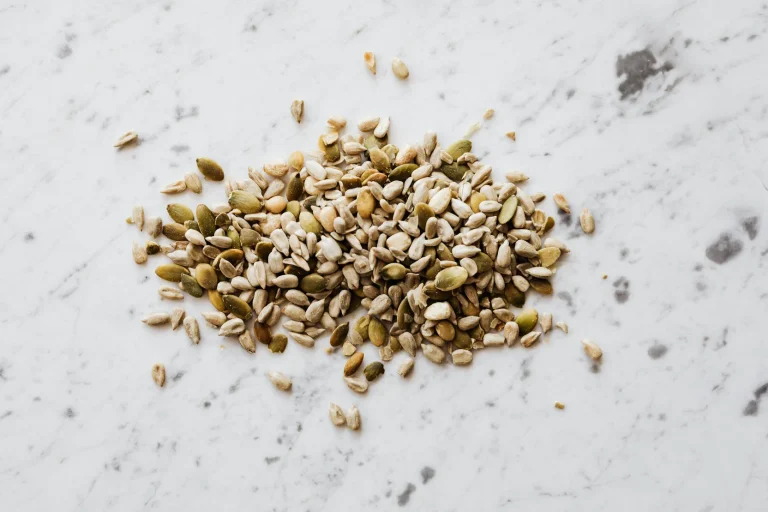
The richest everyday sources are seeds, leafy greens, nuts, pulses and whole grains. A 30g handful of pumpkin seeds provides around 156mg, a cup of cooked spinach a similar amount, and a portion of black beans about 120mg. The UK reference intake is around 300mg a day for men and 270mg for women, from all sources combined.
For the full list with amounts per serving, see our guide to the top 10 magnesium-rich foods.
Where magnesium glycinate fits in
If you do choose to supplement, the form matters. Magnesium glycinate is the form most often recommended for daily use because it is well absorbed and gentle on the stomach, unlike cheaper forms such as magnesium oxide.
It also brings glycine, a calming amino acid, which is why glycinate is popular for winding down in the evening. Magnesium contributes to normal muscle function, normal psychological function, and the reduction of tiredness and fatigue.
For what the form does and how to dose it, see our guide to the benefits of magnesium glycinate, and our comparison of the different forms of magnesium and their side effects.
Frequently asked questions
Is magnesium glycinate found in food?
No. Magnesium glycinate is a supplement form, made by binding magnesium to the amino acid glycine during manufacturing. Food contains magnesium in other natural compounds, not the glycinate chelate specifically. To raise your intake from food, eat magnesium-rich foods such as pumpkin seeds, leafy greens, nuts and pulses.
If it is not in food, where does magnesium glycinate come from?
It is made by combining a magnesium salt with glycine, an amino acid, to form a chelate called magnesium bisglycinate. This pairing is designed to be absorbed through amino acid pathways in the gut, which makes it well tolerated and well absorbed compared with inorganic forms like magnesium oxide.
Do I still need magnesium-rich foods if I take a glycinate supplement?
Yes. A supplement is meant to top up the gap left by diet, not replace it. Magnesium-rich foods bring fibre and other nutrients alongside the mineral, so a food-first approach with a supplement to fill any shortfall is sensible.
This article is for informational purposes only and does not constitute medical advice. If you have a health condition, reduced kidney function, or take prescription medication, speak with your GP or pharmacist before starting a magnesium supplement.
Find our guides useful? Add Epsilon Life as a preferred source on Google to see more of them in your search results.
Add to Google preferred sources