

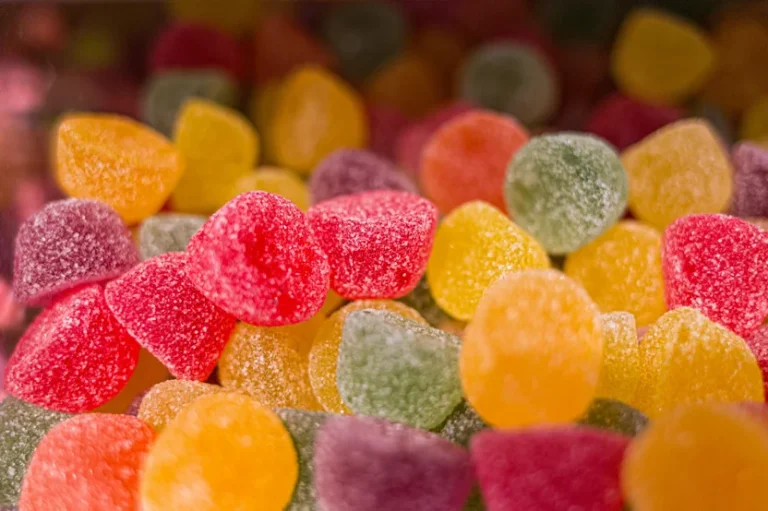
Probiotic gummies have become the most visible face of gut health on UK pharmacy shelves. They are easy to take, they taste like sweets, and the packaging promises better digestion, stronger immunity and fewer bloated afternoons. Whether they do any of that is a more uncomfortable question than the category likes to admit.
This is an honest look at whether probiotic gummies work, why the format fights the biology of what is inside it, and what you should be checking on the label before you buy. We will cover the four structural problems that apply to the category (manufacture, stomach acid, stretched “clinical” claims and the evidence gap), how gummies compare with capsules and fermented liquids, and when a gummy might still be a reasonable choice.
The short verdict
Probiotic gummies are the weakest of the common probiotic formats. The gummy matrix is a hostile environment for live bacteria during manufacture, storage and passage through the stomach, and the clinical trials brands cite are almost always done in other formats. For mild, general “digestive support” in someone with no specific complaint, a well-made gummy taken consistently probably does little harm and may offer a modest placebo-adjacent benefit. For anything more targeted (IBS, post-antibiotic recovery, specific strain-indicated use cases) a capsule, sachet or fermented liquid is a better-evidenced format.
What probiotics are actually supposed to do
The International Scientific Association for Probiotics and Prebiotics defines probiotics as “live microorganisms that, when administered in adequate amounts, confer a health benefit on the host.” The key words are live, adequate and specific. Benefits are tied to specific strains at specific doses for specific conditions, not to probiotics as a category. A strain that reduces antibiotic-associated diarrhoea is not automatically the same strain that helps IBS, and neither claim transfers to a different product just because it contains bacteria.
The areas where human trial evidence is strongest are antibiotic-associated diarrhoea, acute infectious diarrhoea in children, and some subsets of IBS. Evidence for “general digestive support”, “immunity”, “energy” or “skin clarity” is much weaker and leans heavily on mechanistic plausibility rather than trial outcomes. None of this is an argument that probiotics do not work. It is an argument that the label matters more than most shoppers realise.
Problem one: the gummy matrix fights the bacteria
Gummies are made by pouring a hot, wet slurry of sugar, gelatin or pectin, water and flavouring into moulds. Even when the probiotic is added after the cooking step (which is standard practice for heat-sensitive ingredients), the finished gummy still holds roughly 15 to 20 percent residual moisture, sits at a mildly acidic pH, and contains sugars that can feed contamination or disrupt the gel matrix over time.
Probiotic bacteria do not like any of that. Their viability depends on stable cell membranes and metabolic dormancy, which degrade above 30°C and accelerate sharply with moisture. Published data on Lactobacillus rhamnosus GG, one of the best-studied probiotic strains, shows viability losses in the region of 65 percent within 72 hours at 40°C. That is a storeroom in summer or the back of a car, not an extreme scenario.
Independent testing of commercial probiotic gummies has found that some products retain only 10 to 30 percent of their labelled CFU count after a few months on shelf. Capsule formats, particularly those using freeze-dried bacteria in desiccant-lined bottles, hold their CFU count considerably better because the environment inside the capsule is dry, dark and cool.
The label number is quoted “at time of manufacture” unless stated otherwise. That is the CFU count before any of the above has happened. What you actually consume at month six is an open question no consumer-facing brand tests on an ongoing basis.
Problem two: no protection from stomach acid
Probiotics only do anything if meaningful numbers of viable bacteria reach the small intestine or colon. Gastric acid (pH around 1.5 to 3.5 in a fasted stomach) kills most probiotic strains on contact unless the delivery format offers some protection.
Capsules can be enteric-coated, which delays dissolution until the capsule reaches the more neutral pH of the small intestine. Fermented dairy and fermented drinks offer the bacteria a food matrix buffer and often arrive with their own metabolic byproducts, which may moderate the acid kill. A gummy has none of this. It dissolves in the mouth and stomach, and any live bacteria inside are exposed to full gastric acid with no barrier.
No probiotic format delivers 100 percent of its live cells to the colon, but the gap between an enteric capsule and a gummy is not trivial. It is one of the less-discussed reasons why the trials that produce positive results tend to use capsules or sachets.
Problem three: the “clinical” framing is being stretched
Supplement brands increasingly lean on clinical-style language: named strains, CFU counts on the front of the pack, claims about “research-backed” formulas. That framing fits isolated single-strain products, but it is often applied loosely to gummies where the strain mix, survival rate and dose at the point of consumption are unknown.
A gummy advertised as containing a “clinically researched” strain sometimes names the strain; more often it hints at research that was done with a different strain of the same species in a different format at a different dose. This is technically within marketing law and is nearly impossible to verify as a shopper.
Traditional fermented foods operate under a different framework altogether. Kefir, live yoghurt, sauerkraut, kombucha and fermented honey or fruit preparations are not typically labelled with strain designations or precise CFU counts, because the value of a living ferment sits in the overall microbial community plus the metabolites, acids, peptides and bioactive compounds the fermentation produces. That is a legitimate model; it is simply not the same model as a single-strain clinical supplement, and the two should not be judged against the same checklist.
Problem four: the clinical evidence gap
Probiotic research is extensive. Probiotic research on gummies specifically is not. A scan of the published literature turns up very few human trials that used a gummy as the delivery format. The trials the category leans on are almost exclusively done with capsules, sachets, sticks, or fermented dairy. A brand saying “our strain is clinically researched” is often technically true at the strain level and misleading at the format level: the strain has been studied, but usually not in a hot-poured gummy that has then sat on a shelf for months.
This is not a conspiracy, it is a commercial reality. Gummies are a newer delivery format for probiotics and the research lags the marketing by a decade or more. Until format-specific trials exist, claims about gummy efficacy are extrapolations rather than direct evidence.
Probiotic gummies vs capsules vs fermented liquids
The three most common probiotic formats perform differently against each of the criteria above. The simplified picture:
| Format | CFU stability on shelf | Stomach acid protection | Typical label transparency | Direct clinical evidence |
|---|---|---|---|---|
| Gummy | Low; significant CFU loss over months | None | Often species only or proprietary blend | Very limited format-specific trials |
| Capsule (freeze-dried, enteric or HPMC) | High, particularly enteric-coated in desiccant bottles | Moderate to high depending on coating | Strain designation usually provided | Most trials use this format |
| Fermented liquid (kefir, yoghurt drink, fermented honey/fruit) | Moderate; refrigeration extends it | Moderate; food matrix and metabolites buffer acid | Whole-food ingredient list; “live” or “unpasteurised” claim | Strong for fermented foods as a category |
| Sachet (freeze-dried powder) | High | Low unless specifically formulated | Usually strain-level | Well-represented in paediatric and travel diarrhoea trials |
What about CFU count?
The marketing tendency to treat a higher CFU number as automatically better is not supported by the research, and the headline figure has become one of the most misleading numbers in the category. A gummy listing “20 billion CFU” on the front of the pack does not translate to better outcomes than a lower-CFU product if the strains are vague, the survival rate through manufacture and the stomach is poor, or the format is wrong for the claim being made.
CFU counts on gummy labels are also quoted at manufacture. By the time the product reaches you, the viable count may be a fraction of the number on the front. Unless a brand publishes end-of-shelf-life testing or third-party data, the headline CFU figure is an upper bound, not a guarantee.
CFU is also the wrong unit of value for a whole-food ferment. A traditionally fermented honey, fruit juice or dairy product delivers a living microbial community alongside organic acids, enzymes, peptides and other fermentation byproducts the bacteria produce. A lower CFU figure in that context is not a weakness; the bacteria are there as part of a living food matrix rather than as an isolated dose. Comparing the CFU number on a freeze-dried capsule with the CFU number on a live ferment is comparing two different product categories.
Do probiotic gummies help with IBS or general digestion?
For IBS specifically, probiotic evidence is strain-dependent. Some Bifidobacterium and Lactobacillus strains have moderate-quality evidence for symptom reduction; others do not. Almost all of the positive trials used capsules or sachets at specified doses for specified durations (typically four to eight weeks). A generic probiotic gummy with undisclosed strains is unlikely to replicate that effect reliably.
For general digestive support, the honest answer is that diet, fibre intake, plant variety and fermented food frequency do more for most people than any single probiotic supplement, in any format. A gummy taken alongside a varied, plant-rich diet with some fermented food is a small addition. A gummy taken instead of those dietary changes is unlikely to move the needle.
When a probiotic gummy might still be right for you
There are cases where a gummy is defensible.
Compliance matters more than format purity. A child or adult who will not take a capsule but will take a gummy is better off with a consistent gummy than with a superior format sitting unused.
You are using it as a general wellness top-up. If your goal is “probably not harmful, possibly helpful, enjoyable to take”, a reputable gummy meets the brief. Expectations should be modest.
You buy recent stock and consume it quickly. Newly manufactured, fast-moving stock is closer to its labelled CFU count than a gummy that has sat on a warm shelf for eight months.
Outside these cases, the evidence favours a capsule containing a named strain and a dose that matches published trial data, or a well-made fermented liquid that provides live cultures and the metabolic byproducts produced during fermentation.
Where Epsilon Life stands
Our gut health product is Biome Bliss, a naturally fermented liquid made from organic honey and organic apple juice with live bacteria. It is closer to a traditional fermented food than a clinical single-strain supplement, and we think about it in those terms.
Biome Bliss delivers roughly 100 million live bacteria per dose. That is deliberately lower than the billions of CFU figures printed on most capsule and gummy packs, and it is meant to be. The bacteria arrive inside a living food matrix alongside the organic acids, enzymes and metabolic byproducts produced during fermentation, so the product works through the whole ferment rather than through live count alone. A freeze-dried capsule with ten billion CFU and a live fermented honey-and-juice drink are not doing the same thing, and they should not be judged by the same CFU ruler.
We chose a fermented liquid rather than a gummy or a freeze-dried capsule for three reasons specific to the problems above. First, traditional ferments have the longest human track record of any probiotic-style food and do not rely on gummy-matrix engineering to keep the bacteria alive. Second, the liquid buffers stomach acid more effectively than a gummy and avoids the heat and moisture damage a gummy matrix imposes during manufacture. Third, it lets us keep the ingredient list short: organic honey, organic apple juice, live cultures.
If you would rather use a gummy or capsule, look for brands that are transparent about what is in the pack and what has been tested. If you would rather stay closer to food, a varied diet with live fermented foods does a lot of the work a supplement is trying to do.
Further reading on gut health
For the fundamentals of what bacteria live in your gut and what they actually do, see what is the gut microbiome. For the pre-, pro- and post-biotic distinctions most labels blur, see prebiotics vs probiotics and postbiotics explained. For recovery after antibiotics, the most evidence-backed use case for supplementation, see how to restore gut health after antibiotics. For the specific evidence on probiotics during H. pylori eradication treatment, see probiotics for H. pylori. For the liquid category comparison, see gut health drinks: what actually works and fermented foods and gut health.
Frequently Asked Questions
Do probiotic gummies actually work?
Probiotic gummies are the weakest of the common probiotic formats. The gummy matrix is hostile to live bacteria during manufacture and storage, provides no protection from stomach acid, and most of the research the category cites was done with capsules or sachets, not gummies. A well-made gummy taken from recent stock may offer modest general digestive support, but for targeted conditions like IBS or post-antibiotic recovery, a strain-specified capsule or fermented liquid is better evidenced.
Do probiotic gummies reach the gut alive?
A fraction of the bacteria in a gummy reach the gut alive, but a smaller fraction than in an enteric-coated capsule or a fermented liquid. Gummies dissolve in the mouth and stomach with no protection, exposing the bacteria to gastric acid at pH 1.5 to 3.5. They also lose viability during months on shelf due to residual moisture and heat exposure. Independent testing of commercial probiotic gummies has found some products retain only 10 to 30 percent of their labelled CFU count after a few months.
Are probiotic gummies better than capsules?
No. Capsules preserve CFU viability better than gummies because they are dry, dark and often desiccant-protected. Enteric-coated capsules also shield the bacteria from stomach acid, which gummies cannot do. Capsules are also where almost all probiotic clinical trials are conducted, so the evidence base applies more directly. The main advantage of gummies is compliance: some people will only take a supplement in gummy form, and consistent intake of a weaker format beats inconsistent intake of a stronger one.
Are there clinical studies on probiotic gummies specifically?
Very few. Most probiotic clinical trials use capsules, sachets, or fermented dairy. When a gummy brand cites a “clinically researched” strain, the research is usually done with that strain in a different format at a different dose. This is technically accurate at the strain level but should not be read as evidence for the gummy format itself.
What CFU count should a probiotic have?
Higher CFU is not uniformly better, and CFU is not the right unit of value for every type of product. Clinical single-strain trials typically use 1 to 10 billion CFU, but traditional fermented foods and drinks (kefir, live yoghurt, fermented honey or fruit preparations) deliver their benefit through the whole ferment — live bacteria plus organic acids, enzymes and other fermentation byproducts — and are not directly comparable on CFU alone. Most importantly, CFU counts are quoted at manufacture, so headline figures on a gummy or capsule label are an upper bound rather than a guarantee.
Do probiotic gummies help with IBS?
The evidence for probiotics in IBS is strain-specific. Certain Bifidobacterium and Lactobacillus strains have moderate evidence for symptom reduction, almost always studied in capsule or sachet form at named strain-level doses over four to eight weeks. A generic probiotic gummy with undisclosed strains is unlikely to reliably replicate those results. For IBS, a capsule with a named, clinically trialled strain matching your predominant symptom pattern is a better-evidenced choice.
How do you read a probiotic label?
It depends what kind of product you are looking at. For a clinical-style single-strain supplement marketed for a specific condition, you want named strains, a CFU count near end of shelf life and ideally third-party testing. For a traditional fermented food or drink (kefir, live yoghurt, fermented honey or fruit), the useful signals are different: a short, recognisable ingredient list, the word “live” or “unpasteurised”, cold storage, and absence of added sugar or preservatives. Both can be legitimate; they are just different categories judged by different criteria.
Are probiotic gummies safe to take every day?
For most healthy adults, yes. Probiotics in widely-used commercial strains have a strong safety record at typical doses. The sugar in a sweetened gummy is worth watching as a daily-use consideration. People who are immunocompromised, have central venous catheters, or have severely damaged gut barriers should consult a clinician before taking any probiotic product.
References
- Hill C, Guarner F, Reid G, et al. The International Scientific Association for Probiotics and Prebiotics consensus statement on the scope and appropriate use of the term probiotic. Nat Rev Gastroenterol Hepatol. 2014;11(8):506–514.
- Sanders ME, Merenstein DJ, Reid G, Gibson GR, Rastall RA. Probiotics and prebiotics in intestinal health and disease: from biology to the clinic. Nat Rev Gastroenterol Hepatol. 2019;16(10):605–616.
- Fredua-Agyeman M, Gaisford S. Comparative survival of commercial probiotic formulations: tests in biorelevant gastric fluids and real-time measurements using microcalorimetry. Beneficial Microbes. 2015;6(1):141–151.
- Kolaček S, Hojsak I, Berni Canani R, et al. Commercial Probiotic Products: A Call for Improved Quality Control. J Pediatr Gastroenterol Nutr. 2017;65(1):117–124.
- Ford AC, Harris LA, Lacy BE, Quigley EMM, Moayyedi P. Systematic review with meta-analysis: the efficacy of prebiotics, probiotics, synbiotics and antibiotics in IBS. Aliment Pharmacol Ther. 2018;48(10):1044–1060.
- International Probiotics Association. Probiotic storage and stability resources. ipa-biotics.org
Find our guides useful? Add Epsilon Life as a preferred source on Google to see more of them in your search results.
Add to Google preferred sources