


Table of Contents
A quiet kind of inflammation that builds over decades
Most people associate inflammation with something visible: a swollen joint, a red wound, a fever. That kind of acute inflammation is protective. It flares up, does its job, and resolves.
Inflammaging is different. It is a low-grade, chronic inflammatory state that develops gradually from midlife onwards. You cannot feel it in the way you feel a sprained ankle. But it shows up in blood markers, and over time, it contributes to cardiovascular disease, metabolic dysfunction, cognitive decline, and a weakened immune system.
The term was first introduced by immunologist Claudio Franceschi in 2000 to describe the observation that ageing itself produces a measurable shift toward a pro-inflammatory immune profile, even in the absence of infection or injury (Franceschi et al., 2000). Since then, research has increasingly pointed to one system as a central driver of inflammaging: the gut microbiome.
What Is Inflammaging?
Inflammaging refers to the chronic, sterile, low-grade inflammation that accompanies ageing. Unlike the acute inflammation triggered by a pathogen or an injury, inflammaging has no single clear cause. It builds from multiple sources over time.
A major review in Nature Medicine (Furman et al., 2019) identified inflammaging as a significant risk factor for at least seven of the top causes of mortality in developed countries, including heart disease, cancer, diabetes, and neurodegenerative conditions. The review found that chronic low-grade inflammation accelerates biological ageing and reduces healthspan, the number of years lived in good health.
Key markers of inflammaging include elevated levels of C-reactive protein (CRP), interleukin-6 (IL-6), and tumour necrosis factor alpha (TNF-alpha). These are measurable through standard blood tests and tend to rise progressively from the 40s onwards.
How the Gut Microbiome Drives Inflammaging
The gut microbiome is not just a passive bystander in inflammaging. Research now shows it is one of the primary mechanisms through which chronic inflammation develops with age.
Microbial diversity declines
A landmark study in Nature (Claesson et al., 2012) found that gut microbiome diversity declines significantly in older adults. Beneficial species, particularly Bifidobacterium and butyrate-producing bacteria, decrease. These bacteria play a direct role in maintaining the gut barrier and regulating immune responses. As they decline, the balance shifts toward more inflammatory species.
For more on how these changes progress, see our guide to gut health after 40. The decline in diversity also affects hormonal balance: a group of gut bacteria known as the estrobolome regulates oestrogen metabolism, and its function deteriorates as diversity falls.
The gut barrier weakens
A study published in Cell Host & Microbe (Thevaranjan et al., 2017) demonstrated that age-related changes in the gut microbiome directly increase intestinal permeability. When the gut barrier becomes more permeable, bacterial fragments such as lipopolysaccharides (LPS) leak into the bloodstream. The immune system recognises these fragments as threats and mounts an inflammatory response. This same leaky-gut mechanism is a major driver of inflammatory skin conditions like acne, eczema and rosacea; see our guide to the gut-skin axis for how the two connect. This happens continuously at a low level, contributing to the chronic inflammatory state that defines inflammaging.
Immune regulation becomes less precise
Around 70 to 80 percent of the immune system resides in the gut. The microbiome helps train immune cells to distinguish between genuine threats and harmless substances. As the microbiome becomes less diverse with age, this calibration weakens. The result is an immune system that is simultaneously less effective at fighting infections and more prone to inappropriate inflammatory responses.
What Inflammaging Does to the Body
The effects of inflammaging are not confined to one organ or system. Chronic low-grade inflammation acts as a background accelerator of multiple age-related conditions.
Cardiovascular health
Elevated inflammatory markers, particularly CRP and IL-6, are strongly associated with increased risk of atherosclerosis, heart attack, and stroke. Inflammation damages the endothelial lining of blood vessels and promotes plaque formation. This is why CRP testing has become a standard part of cardiovascular risk assessment.
Metabolic function
Inflammaging contributes to insulin resistance, the precursor to type 2 diabetes. Inflammatory cytokines interfere with insulin signalling pathways, making cells less responsive to insulin. This partly explains why metabolic syndrome becomes more prevalent after 40, even in people who maintain a stable weight.
Brain health
Neuroinflammation, inflammation within the brain itself, is increasingly recognised as a driver of cognitive decline and neurodegenerative diseases. The gut-brain axis means that systemic inflammation originating in the gut can cross the blood-brain barrier and activate inflammatory responses in neural tissue. For more on this connection, see our post on the gut-brain axis and mood.
Joint and musculoskeletal health
Chronic inflammation accelerates cartilage degradation and contributes to osteoarthritis. It also impairs muscle repair and recovery, contributing to the age-related loss of muscle mass known as sarcopenia.
What You Can Do to Reduce Inflammaging
The most important finding in inflammaging research is that this process is modifiable. Diet and lifestyle changes can measurably reduce inflammatory markers, even in people who are already in midlife or beyond.
Prioritise anti-inflammatory foods
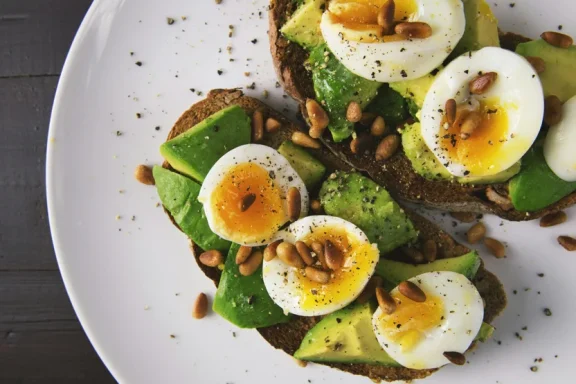
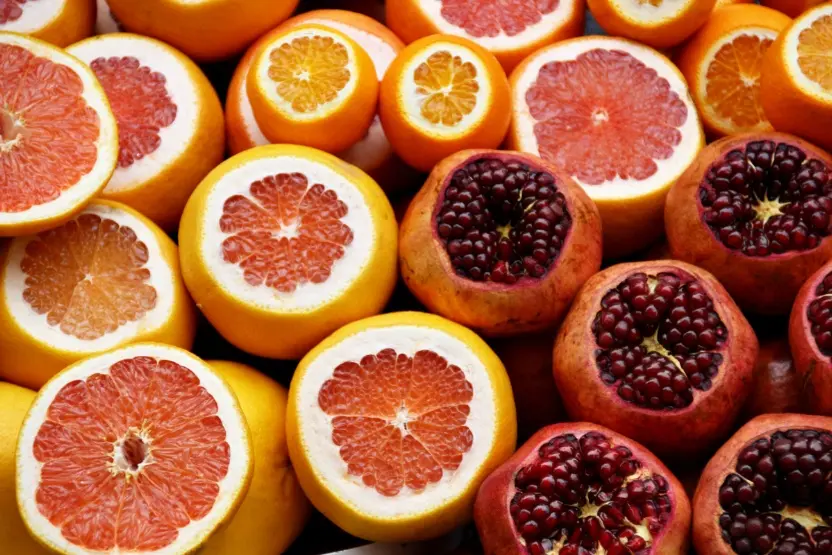
A diet rich in vegetables, fruits, whole grains, oily fish, nuts, and olive oil consistently reduces inflammatory markers in clinical trials. The Mediterranean diet pattern has the strongest evidence base for reducing CRP and IL-6 levels. At the same time, reducing ultra-processed foods, refined sugars, and processed meats removes dietary sources that actively promote inflammation. For specific foods to watch out for, see our post on foods that cause inflammation.
Increase fermented food intake
A clinical trial published in Cell (Wastyk et al., 2021) found that a high-fermented food diet increased microbiome diversity and reduced inflammatory markers, including proteins specifically associated with inflammaging, over a 10-week period. Live yoghurt, kefir, sauerkraut, kimchi, and miso are all effective sources. See our detailed post on fermented foods and gut health.
Feed your beneficial bacteria
Prebiotic fibres from garlic, leeks, onions, asparagus, oats, and Jerusalem artichokes specifically feed the Bifidobacterium and butyrate-producing species that decline with age. Butyrate is particularly important: it strengthens the gut barrier, reduces intestinal permeability, and has direct anti-inflammatory effects on the gut lining. For a broader look at what supports a healthy microbiome, see our guide to the microbiome diet.
Consider targeted probiotic support
Dietary changes are the foundation. But a multi-strain probiotic can provide additional support for the specific bacterial populations that decline in midlife. Strains with the strongest evidence for reducing inflammatory markers include Lactobacillus rhamnosus, Lactobacillus plantarum, and Saccharomyces boulardii.
Our Biome Bliss contains five clinically researched strains in a fermented liquid format, using organic honey, apple juice, and 25 organic herbs. The fermentation process produces beneficial postbiotic compounds alongside the live bacteria, and the formula contains no artificial fillers or binders.
Move regularly
Exercise is one of the most potent anti-inflammatory interventions available. Moderate-intensity physical activity, such as brisk walking, cycling, or swimming, reduces CRP and IL-6 levels. Research suggests that 150 minutes per week of moderate activity is the minimum threshold for measurable anti-inflammatory effects. Resistance training also helps by preserving muscle mass, which itself has anti-inflammatory properties.
Manage sleep and stress
Chronic sleep deprivation (consistently under seven hours) and chronic psychological stress both elevate inflammatory markers independently of diet or exercise. Cortisol, the primary stress hormone, disrupts gut barrier function and alters microbiome composition. Addressing sleep quality and stress management is not optional if the goal is to reduce inflammaging.
What to Expect
Measurable reductions in inflammatory markers like CRP typically appear within four to eight weeks of consistent dietary and lifestyle changes. Gut microbiome diversity responds even faster, with detectable shifts within days of dietary changes, though sustained improvement takes longer.
The key word is consistent. Inflammaging develops over decades, and reversing it is not a quick fix. But the research is clear that the inflammatory trajectory of ageing is not fixed. It responds to what you eat, how you move, and how you care for your gut.
For a broader overview of how the gut microbiome works, see our guide to what the gut microbiome is and why it matters.
FAQ
What are the first signs of inflammaging?
Inflammaging is typically silent in its early stages. It does not produce obvious symptoms the way acute inflammation does. The most reliable indicator is elevated blood markers such as C-reactive protein (CRP), interleukin-6 (IL-6), or TNF-alpha. Some people notice indirect signs such as increased fatigue, slower recovery from exercise, joint stiffness, or more frequent minor illnesses, but these overlap with many other conditions. A blood test through your GP is the most reliable way to check.
Is inflammaging the same as chronic inflammation?
Inflammaging is a specific type of chronic inflammation. It refers to the low-grade, sterile inflammation that develops as a consequence of ageing itself, rather than from an infection, autoimmune condition, or injury. Other forms of chronic inflammation (such as from an autoimmune disease) have different causes and mechanisms, though they can overlap with and worsen inflammaging.
Can you reverse inflammaging?
You can measurably reduce it. Clinical trials show that dietary changes (particularly increasing fermented foods and plant diversity), regular exercise, and adequate sleep all reduce the inflammatory markers associated with inflammaging. Whether complete reversal is possible depends on age, baseline health, and how long the inflammatory state has been developing, but meaningful improvement is achievable at any age.
Does gut health affect inflammaging?
Yes, significantly. The gut microbiome is now recognised as one of the primary drivers of inflammaging. Age-related declines in microbiome diversity, weakening of the gut barrier, and loss of beneficial bacterial species all contribute directly to the systemic inflammation that defines inflammaging. Interventions that improve gut health, such as fermented foods, prebiotic fibre, and probiotic supplementation, consistently reduce inflammatory markers in clinical studies.
At what age does inflammaging start?
Inflammatory markers begin to rise measurably from the 40s onwards in most people, though the rate varies depending on genetics, diet, lifestyle, and medical history. Some research suggests the groundwork is laid earlier, with gut microbiome diversity beginning to decline from the 30s. The most significant acceleration typically occurs between 45 and 65.
References
- Franceschi C et al. Inflamm-aging. An evolutionary perspective on immunosenescence. Annals of the New York Academy of Sciences. 2000;908:244–254. PubMed
- Furman D et al. Chronic inflammation in the etiology of disease across the life span. Nature Medicine. 2019;25(12):1822–1832. PubMed
- Claesson MJ et al. Gut microbiota composition correlates with diet and health in the elderly. Nature. 2012;488:178–184. PubMed
- Thevaranjan N et al. Age-Associated Microbial Dysbiosis Promotes Intestinal Permeability, Systemic Inflammation, and Macrophage Dysfunction. Cell Host & Microbe. 2017;21(4):455–466. PubMed
- Wastyk HC et al. Gut-microbiota-targeted diets modulate human immune status. Cell. 2021;184(16):4137–4153. PubMed
- Franceschi C et al. Inflammaging and anti-Inflammaging: A systemic perspective on aging and longevity. Mechanisms of Ageing and Development. 2007;128(1):92–105. PubMed
This article is for informational purposes only and does not constitute medical advice. If you have a health condition or are considering supplementation, speak to your GP or a registered dietitian before making changes.
Find our guides useful? Add Epsilon Life as a preferred source on Google to see more of them in your search results.
Add to Google preferred sources