

If you take vitamin D and your blood levels still won’t budge, the problem usually isn’t dose. It’s absorption.
Vitamin D is a fat-soluble nutrient. That one fact shapes almost everything about how well a supplement works: what you eat with it, which form you choose, whether your gut is working normally, and which medications you take. Dose matters, but a 2,000 IU capsule taken on an empty stomach can deliver less usable vitamin D than a 1,000 IU capsule taken alongside a proper fatty meal.
This guide covers what actually improves vitamin D absorption, what reduces it, and how to think about the different supplement formats (softgels, capsules, gummies, sprays, liposomal) without falling for marketing that runs ahead of the evidence.
Quick Answer: 5 Evidence-Based Levers
- Take it with a fat-containing meal. A 2015 study in The Journal of the Academy of Nutrition and Dietetics reported around a 32% increase in blood vitamin D levels when the supplement was taken with a fat-containing meal versus on an empty stomach.
- Take it with your largest meal of the day. A Mayo Clinic study (Mulligan & Licata, 2010) found a roughly 56% improvement in 25-OH vitamin D levels when patients switched from taking the supplement on an empty stomach or with a small meal to their largest meal.
- Use D3 (cholecalciferol), not D2. Head-to-head trials consistently show D3 raises and sustains blood levels more effectively than D2.
- Choose an oil-vehicle delivery format (oil-filled softgel or a capsule with MCT oil powder) over a plain dry compressed tablet, especially if you sometimes take your supplement without a proper meal.
- Make sure magnesium is adequate. Magnesium is a cofactor in every major enzymatic step that converts vitamin D to its active form. Low magnesium can blunt the response to supplementation.
If your levels are stuck despite doing all of this, the likely cause is a medical issue (fat-malabsorption, obesity, certain medications) rather than the supplement itself. We cover that further down.
How Vitamin D Absorption Actually Works
Vitamin D behaves like a fat. When you swallow a capsule, the vitamin D doesn’t simply cross the gut wall on its own. It needs to be incorporated into mixed micelles, tiny lipid droplets formed in the small intestine by bile salts and pancreatic lipase. These micelles deliver the vitamin D to intestinal cells, where it’s packaged into chylomicrons and sent into the lymphatic system before reaching the bloodstream.
From there, vitamin D travels to the liver, where it’s converted to 25-hydroxyvitamin D (the form measured in blood tests, written as 25-OH D). A second conversion in the kidneys produces the active hormone, 1,25-dihydroxyvitamin D.
This matters practically because every stage requires specific conditions to work:
- Micelle formation needs dietary fat and healthy bile flow.
- The conversion steps in liver and kidney require magnesium as a cofactor.
- Any condition that disrupts fat digestion (coeliac disease, Crohn’s, pancreatic insufficiency, bariatric surgery) can reduce how much vitamin D reaches the bloodstream.
For a deeper look at how long these processes take to register on a blood test, see our guide on how long vitamin D takes to work.
What Improves Vitamin D Absorption
1. Take It With a Fat-Containing Meal
This is the single biggest lever. A 2015 study by Dawson-Hughes and colleagues found that taking vitamin D with a meal that contained fat produced roughly 32% higher 25-OH D levels than taking it fat-free. The effect size varies between studies (other trials report smaller or larger gains), but the direction is consistent: fat helps.
Practical reading: any meal with a meaningful fat content works. Eggs, avocado, oily fish, full-fat yoghurt, olive oil, nut butters. You don’t need a specific “vitamin D food” — you need enough fat in the meal to stimulate bile release and form micelles. Even 10–15 grams of fat is usually sufficient.
2. Take It With Your Largest Meal
The Mulligan and Licata study at Mayo Clinic tracked patients whose vitamin D levels had plateaued despite supplementation. When instructed to take their vitamin D with their largest meal of the day rather than on an empty stomach or with breakfast, 25-OH D levels rose by an average of 56% over 2–3 months at the same supplement dose.
For most UK adults, dinner is the largest meal and contains the most fat. For that reason, taking vitamin D at dinner is a reasonable default, though the specific meal matters less than consistently pairing the supplement with meaningful food intake.
3. Choose D3 Over D2
Vitamin D comes in two forms: D2 (ergocalciferol, plant-derived) and D3 (cholecalciferol, the form your skin produces and the form found in animal sources). A 2012 meta-analysis in the American Journal of Clinical Nutrition (Tripkovic et al.) found D3 raised 25-OH D levels roughly twice as effectively as equivalent doses of D2, and sustained those levels for longer.
Most UK supplements sold today are D3. If you’re looking at a supplement that lists “vitamin D” without specifying, check the label. For a full breakdown of why D3 is the preferred form, see our D3 and K2 benefits guide.
4. Use an Oil-Vehicle Delivery Format
Because vitamin D is fat-soluble, any supplement format that delivers it in or alongside a lipid carrier has a built-in absorption advantage over a plain dry compressed tablet, particularly if you sometimes take the supplement without a proper meal.
Two formats do this well:
- Oil-filled softgels: vitamin D dissolved in a carrier oil (olive, MCT, sunflower). The industry reference format.
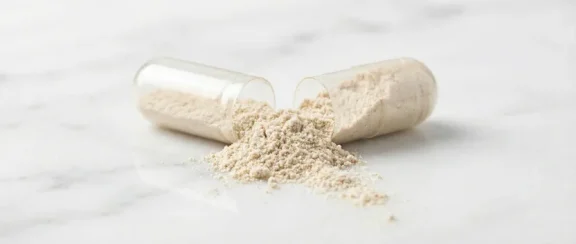
- HPMC capsules containing MCT oil powder: the vitamin D is blended with medium-chain triglyceride powder inside a vegetarian capsule shell. Medium-chain fats absorb via the portal vein and don’t depend on the full bile and pancreatic lipase cascade that long-chain fats require, which can be a practical advantage for people with partial fat-malabsorption.
We’ll cover the formats in more detail further down, including sublingual sprays, gummies, and liposomal products.
5. Make Sure Magnesium Is Adequate
Magnesium is an enzymatic cofactor at every major step of vitamin D metabolism: the liver conversion to 25-OH D, the kidney conversion to active 1,25-dihydroxy D, and the binding of vitamin D to its transport protein. A 2018 review in The Journal of the American Osteopathic Association argued that magnesium deficiency may be a common reason vitamin D supplementation fails to raise blood levels as expected.
UK dietary surveys consistently show that many adults fall below the reference nutrient intake for magnesium. If you’ve supplemented vitamin D for months and your 25-OH D isn’t rising, magnesium status is worth checking. Our magnesium glycinate provides a highly bioavailable form, and we cover the broader relationship in our guide to zinc, magnesium and vitamin D working together.
6. Be Consistent: Daily Over Weekly
Large weekly or monthly bolus doses were popular in older clinical practice. Current research suggests daily dosing produces steadier blood levels, more stable transport protein binding, and likely better downstream effects than equivalent doses given as large infrequent boluses.
For the “how much, how often” question, see our detailed guide on D3 and K2 dosage and how to take them.
What Blocks or Reduces Vitamin D Absorption
If you’ve done everything right and your levels still aren’t moving, one of the following is usually why.
Fat-Malabsorption Conditions
Anything that disrupts fat digestion reduces vitamin D absorption. The main culprits:
- Coeliac disease (untreated or recently diagnosed): damages the small intestine villi, where fat and fat-soluble vitamins are absorbed.
- Crohn’s disease and other inflammatory bowel conditions: can affect absorption depending on location and severity.
- Pancreatic insufficiency: reduces lipase output, impairing fat digestion.
- Cystic fibrosis: similar mechanism via pancreatic function.
- Bariatric surgery (gastric bypass, sleeve): reduces the absorptive surface area and changes fat handling. Patients typically need higher vitamin D doses and often a more bioavailable format.
- Cholestatic liver disease: reduces bile flow, which is essential for micelle formation.
If you have any of these and are supplementing vitamin D without seeing your levels rise, speak with your GP about dose, format, and monitoring.
Very Low-Fat Diets
Extreme low-fat eating blunts vitamin D absorption. This is a practical issue mainly in specific dieting contexts (very low-fat weight loss diets, certain medical diets). Normal UK eating patterns contain more than enough fat for adequate absorption.
Certain Medications
Several drug classes reduce vitamin D absorption or metabolism:
- Orlistat (weight-loss medication): blocks fat absorption generally, including fat-soluble vitamins. Take vitamin D at least two hours apart from orlistat.
- Cholestyramine and colestipol (bile acid sequestrants): bind bile salts and reduce fat-soluble vitamin uptake.
- Certain anticonvulsants (phenytoin, phenobarbital, carbamazepine): accelerate the breakdown of vitamin D in the liver.
- Long-term corticosteroids: reduce intestinal calcium absorption and alter vitamin D metabolism.
- Some antiretrovirals and antifungals: can affect vitamin D metabolism at higher doses.
Do not stop any prescribed medication based on this. Speak with your GP about whether a higher vitamin D dose or more frequent monitoring makes sense for your situation. Medications are just one factor that can quietly lower your vitamin D status; see our full guide to what depletes vitamin D for the others.
Higher Body Weight
This isn’t strictly an absorption issue, but it commonly presents as one. Vitamin D is fat-soluble, so it distributes into adipose tissue. People with higher body weight typically need larger supplemental doses to reach the same 25-OH D level as lean individuals. Studies suggest the per-kg dose requirement can be 1.5 to 2 times higher in people with obesity.
If your BMI is in the overweight or obese range and your vitamin D isn’t rising on a standard dose, this is likely the explanation. A higher maintenance dose (within safe limits) is typically what’s needed, not a different supplement.
Ageing Skin (a Different Issue)
Older adults often have lower vitamin D levels, but this is mostly a synthesis issue (the skin produces less vitamin D from sunlight as it ages) rather than a gut absorption issue. Oral absorption remains broadly similar with age. For more on vitamin D in older adults, see our vitamin D for seniors guide.
Sunscreen: The Real Answer
In theory, sunscreen blocks UVB and should reduce the skin’s own vitamin D synthesis. In practice, most people apply sunscreen too thinly and too infrequently for it to materially block vitamin D production. Studies on real-world sunscreen use consistently find little effect on 25-OH D levels. This is about sun synthesis, not gut absorption, and it’s not a meaningful issue for most people.
Supplement Formats Compared: What Actually Matters
Beyond “take it with fat,” the format you choose has a smaller but real effect. Here’s an honest comparison.
| Format | Absorption | Best For | Watch Out For |
|---|---|---|---|
| Oil-filled softgel | Good, reference format | Most adults | Usually bovine gelatin (not vegetarian) |
| HPMC capsule with MCT oil powder | Good, comparable to softgel | Vegetarian, vegan, halal, kosher | Fewer brands offer this format |
| Plain dry tablet | Lower without fatty meal | Budget, taken with proper meals | Poor if taken fasted |
| Gummies | Adequate when dose is accurate | People who won’t take capsules, kids | Sugar, label-accuracy variance, usually lower dose |
| Sublingual spray or drops | Similar to oral | Severe GI issues, swallowing difficulty | No proven superiority over oral |
| Liposomal | Unclear, limited evidence | Niche use | Price premium without strong supporting data |
Oil-Filled Softgels
The standard reference format. Vitamin D dissolved in a carrier oil (most commonly olive, MCT, or sunflower oil), then sealed in a gelatin capsule. Absorption is reliable because vitamin D is already pre-dissolved in its lipid carrier. The main drawback is that most softgels use bovine gelatin, which rules them out for vegetarians, vegans, and some religious dietary requirements.
HPMC Capsules With MCT Oil Powder
A vegetarian (plant-based HPMC) capsule containing vitamin D blended with medium-chain triglyceride powder. Two practical advantages over a softgel:
- Vegetarian, vegan, halal, and kosher-friendly. No animal-derived gelatin.
- MCTs absorb via the portal vein rather than the lymphatic chylomicron pathway. They don’t depend on the full bile-salt and pancreatic lipase cascade that long-chain fats require, which may help in people with partial fat malabsorption.
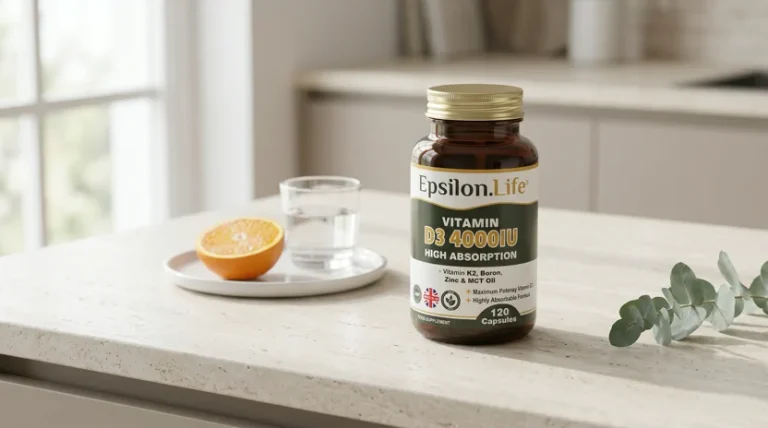
Head-to-head RCTs comparing MCT-powder capsules to oil-filled softgels specifically for vitamin D are limited, so we won’t overclaim. The reasonable position is that both are oil-vehicle delivery formats and both outperform plain dry compressed tablets. Our Vitamin D3 with K2, Zinc, Boron and MCT Oil uses this format.
Plain Dry Tablets
Vitamin D pressed into a dry tablet with binders and fillers, no lipid carrier. These are often the cheapest option. The honest reading: they work fine if you take them with a high-fat meal. Without a fatty meal, absorption drops off. If you regularly take your vitamin D on an empty stomach or with a low-fat breakfast, a dry tablet is a worse choice than an oil-vehicle format.
Gummies
Gummies absorb vitamin D adequately when the dose listed on the label is actually in the gummy. That last bit is where gummies run into trouble, not absorption per se. Independent analyses have found meaningful differences between label claims and actual vitamin D content in some gummy brands, particularly near the end of shelf life. Gummies also typically deliver lower doses (400–1,000 IU) than capsules (2,000–4,000 IU), carry added sugar, and can become a daily sugar source if taken long-term.
They’re a reasonable format for children, for people who genuinely won’t take capsules, and for low-dose maintenance. They’re a poor fit for precision dosing, deficiency correction, or low-sugar diets. We cover the full picture in a dedicated guide: Do Vitamin D Gummies Actually Work? (coming soon).
Sublingual Sprays and Drops
Marketed as “bypassing the gut” for faster absorption. The biology is shakier than the marketing suggests. Vitamin D is fat-soluble and the sublingual mucosa isn’t well suited to absorbing fat-soluble compounds efficiently; most of what’s sprayed under the tongue gets swallowed and absorbed orally. Small RCTs comparing sublingual vitamin D to standard oral tablets generally find similar (not superior) absorption.
Sublingual formats have a niche use for people with severe swallowing difficulty or certain GI conditions, but they don’t offer a meaningful absorption advantage for most users.
Liposomal Vitamin D
Liposomal delivery uses phospholipid vesicles to encapsulate the vitamin D. The theoretical case is reasonable, but the human evidence for liposomal vitamin D specifically is limited. There are few well-designed RCTs directly comparing liposomal to a standard oil-filled softgel at equivalent dose, and the marketing consistently runs ahead of the data. Liposomal products also command a significant price premium.
Our honest position: not worth the premium for most people, at least not until larger head-to-head trials are published.
Why Your Vitamin D Levels Might Not Be Going Up
If you’ve been supplementing for months and your 25-OH D isn’t rising, run through this list:
- Dose too low for your starting level. A deficient person starting at 25 nmol/L may need 2,000–4,000 IU daily for months, not 400 IU.
- Taking it on an empty stomach or with a low-fat breakfast. Switch to your largest, fattier meal.
- Weekly or monthly bolus dosing. Daily is usually more effective for steady levels.
- Higher body weight. Your dose requirement may be 1.5 to 2 times a lean adult’s.
- Undiagnosed fat-malabsorption. Coeliac, Crohn’s, pancreatic issues, post-bariatric surgery.
- Interacting medications. Orlistat, cholestyramine, certain anticonvulsants or steroids.
- Low magnesium. Without the cofactor, conversion steps slow down.
- Not long enough. Reaching a new steady state takes 6–8 weeks of daily dosing; deficiency correction often takes 2–3 months. See our vitamin D timeline guide.
For persistently low levels despite appropriate supplementation, a conversation with your GP about investigating malabsorption, checking related nutrients (calcium, magnesium, phosphate, PTH), and reviewing medications is the next appropriate step.
What to Look for in a Vitamin D Supplement
If you’re shopping, this is the short checklist:
- D3 (cholecalciferol), not D2. More effective, better sustained.
- Oil-vehicle delivery. Oil-filled softgel or HPMC capsule with MCT oil powder, rather than a plain dry tablet.
- Dose appropriate for your starting point. 400 IU meets NHS minimum guidance; 1,000–2,000 IU daily is the range used in most adult maintenance research; 4,000 IU is the EFSA upper limit for adults without medical supervision. See our vitamin D deficiency guide for how to read a blood test result.
- Paired with vitamin K2 (MK-7). D3 increases calcium absorption; K2 directs where that calcium goes. The mechanistic case for pairing them is strong.
- Third-party tested or batch-tested for label accuracy. Independent gummy analyses have found label-vs-actual variance, and capsules aren’t immune either.
Our Vitamin D3 with K2, Zinc, Boron and MCT Oil was formulated around these principles: D3 and K2 MK-7 together, delivered in an MCT-oil powder matrix inside a vegetarian HPMC capsule.
Frequently Asked Questions
What is the best form of vitamin D for absorption?
D3 (cholecalciferol) delivered in an oil vehicle: either an oil-filled softgel or a vegetarian HPMC capsule containing MCT oil powder. Both perform better than plain dry compressed tablets, especially when the supplement is taken without a fatty meal. The biggest single factor is not the format, though, but whether you take it with food that contains fat.
Does vitamin K2 help vitamin D absorb?
Not directly. K2 doesn’t change how much vitamin D you absorb from the gut. What K2 does is direct calcium, whose absorption is increased by vitamin D, into bone rather than soft tissue and arteries. This is why D3 and K2 are commonly paired: they address different parts of the same calcium-handling system. For the full picture, see our D3 and K2 guide.
Are liposomal vitamin D supplements actually better?
The theoretical case exists, but the human evidence for liposomal vitamin D specifically is limited. Well-designed head-to-head trials against standard oil-filled softgels at equivalent dose are scarce. Liposomal products usually carry a significant price premium without corresponding trial data to justify it. For most people, a standard oil-vehicle format taken with a fatty meal delivers comparable results at a fraction of the cost.
What foods help vitamin D absorption?
Any food with a meaningful fat content. Eggs, avocado, full-fat yoghurt, oily fish, olive oil, nut butters, cheese. Fatty fish (salmon, sardines, mackerel) also contain their own vitamin D, which is a bonus. You don’t need a specific “vitamin D food” at supplement time; you need enough total fat in the meal (roughly 10–15 grams or more) to support bile release and micelle formation.
Does magnesium help vitamin D absorption?
Magnesium doesn’t change gut absorption of vitamin D itself, but it’s an enzymatic cofactor at every conversion step afterwards. Without adequate magnesium, the vitamin D you absorb is less efficiently converted to 25-OH D and then to the active hormone. In practice, people with low magnesium often show a blunted response to vitamin D supplementation. See our zinc, magnesium and vitamin D guide for the full relationship.
Why is my vitamin D not going up?
The most common reasons: dose is too low for your starting level, you’re taking it without a fatty meal, you’re on a weekly bolus rather than daily, your body weight raises your requirement, you have undiagnosed fat-malabsorption (coeliac, Crohn’s, pancreatic insufficiency), you’re on an interacting medication (orlistat, cholestyramine, certain anticonvulsants), or your magnesium is low. If you’ve been supplementing correctly for three months with no change, speak with your GP about investigating further.
Does sunscreen block vitamin D?
In laboratory conditions, yes. In real-world use, most people apply sunscreen too thinly and too infrequently for it to meaningfully reduce vitamin D synthesis. Studies on everyday sunscreen use consistently find little effect on 25-OH D levels. This is about the skin’s own vitamin D production, not gut absorption of a supplement.
Can you take vitamin D on an empty stomach?
You can, but it’s a poor choice. Absorption drops meaningfully without dietary fat to support micelle formation. Taking your vitamin D with breakfast, lunch, or (best of all) your largest meal of the day produces noticeably better blood levels at the same supplement dose.
Do vitamin D gummies work as well as capsules?
Gummies absorb vitamin D adequately when the label dose is actually present. The issue is usually not absorption itself but dose accuracy, added sugar, and the fact that gummies typically deliver lower doses (400–1,000 IU) than capsules. They’re reasonable for children or for people who won’t take capsules. For deficiency correction, precision dosing, or low-sugar diets, a capsule is usually a better fit.
How long before improved absorption shows on a blood test?
Changes in how you take your vitamin D (with fat, with largest meal, switching format) show up on 25-OH D within 6–8 weeks, as the body reaches a new steady state. Deficiency correction usually runs 2–3 months. Our vitamin D timeline guide covers this in detail.
References
- Dawson-Hughes B, et al. Dietary fat increases vitamin D-3 absorption. Journal of the Academy of Nutrition and Dietetics. 2015;115(2):225-230.
- Mulligan GB, Licata A. Taking vitamin D with the largest meal improves absorption and results in higher serum levels of 25-hydroxyvitamin D. Journal of Bone and Mineral Research. 2010;25(4):928-930.
- Tripkovic L, et al. Comparison of vitamin D2 and vitamin D3 supplementation in raising serum 25-hydroxyvitamin D status. American Journal of Clinical Nutrition. 2012;95(6):1357-1364.
- Uwitonze AM, Razzaque MS. Role of magnesium in vitamin D activation and function. Journal of the American Osteopathic Association. 2018;118(3):181-189.
- Silk LN, et al. The effect of calcium or calcium and magnesium plus vitamin D on bone mass. Osteoporosis International. 2015;26(1):65-74.
- NHS. Vitamin D. 2023.
- Scientific Advisory Committee on Nutrition. Vitamin D and Health. 2016.
- EFSA Panel on Dietetic Products, Nutrition and Allergies. Scientific opinion on the tolerable upper intake level of vitamin D. EFSA Journal. 2012;10(7):2813.
This article is for informational purposes only and does not constitute medical advice. Always consult a qualified healthcare professional before starting any supplement, especially if you are pregnant, have a medical condition, or take prescription medication.
Find our guides useful? Add Epsilon Life as a preferred source on Google to see more of them in your search results.
Add to Google preferred sources