

Millions of people in the UK take a vitamin D supplement every day and still test deficient. In most cases the problem is not that they are forgetting to take it. Something is undermining it.
The usual suspects get most of the attention: not enough sun, too low a dose, or having obesity. Those matter. But a few less obvious factors can quietly work against your vitamin D levels even when you are doing everything else right, and one of them might be a vitamin D supplement itself.
Here is what the research actually shows.
Table of Contents
The vitamin D2 problem
If you take a multivitamin or a cheap vitamin D supplement, check the label. If it says ergocalciferol or vitamin D2, you may be taking a supplement that lowers your natural vitamin D3 levels.
A 2025 systematic review and meta-analysis published in Nutrition Reviews analysed 11 randomised controlled trials. The finding: vitamin D2 supplementation significantly reduces circulating 25-hydroxyvitamin D3, the stronger and more bioactive form. The average drop was around 18 nanomoles per litre. In some participants, D3 fell below the levels observed in people taking no supplement.
Why? D2 shares the same metabolic pathways as D3. It competes for the same binding proteins and speeds up D3 breakdown in the liver. Total vitamin D on a blood test may not look catastrophic because D2 rises to fill part of the gap, but D3-specific activity falls.
The fix is straightforward: choose vitamin D3 (cholecalciferol) rather than D2 (ergocalciferol). This applies to standalone supplements and to multivitamins. Many budget multis still use D2 because it is cheaper to produce. Check the ingredient list, not just the “vitamin D” headline on the front.
Vegans can find lichen-derived D3 rather than defaulting to D2.
Fat-blocking agents
Vitamin D is fat-soluble. It is absorbed through the gut alongside dietary fat, which means anything that significantly reduces fat absorption will reduce vitamin D absorption alongside it.
Orlistat, the weight-loss drug available over the counter in the UK, works by blocking pancreatic lipase and cutting fat absorption. The NHS notes this also reduces absorption of fat-soluble vitamins, including vitamin D. Bile acid sequestrants such as cholestyramine, prescribed for high cholesterol, have the same effect.
These are not everyday supplements, but they are common in the over-40s population most likely to be managing weight or cholesterol long term. If you take either, time your vitamin D dose separately from them where possible, and ask your GP or pharmacist whether your vitamin D status should be monitored.
Prescription medications that speed up vitamin D breakdown
Some drugs do not block absorption. They activate liver enzymes that break vitamin D down faster than your body can replace it.
The main ones are older anticonvulsants (phenytoin, phenobarbital, carbamazepine), long-term corticosteroids such as prednisolone, and rifampin, used in tuberculosis treatment. These induce CYP450 enzymes in the liver, which accelerates vitamin D catabolism. Long-term use is associated with lower 25(OH)D levels and increased bone loss risk.
This is a meaningful interaction for anyone on these medications. We cover the broader picture of how common long-term prescriptions affect nutrient status in our guide to medications that quietly deplete your nutrients after 40. If you are on any of the above, ask your GP whether periodic vitamin D testing makes sense.
Obesity and vitamin D sequestration
This is not a supplement interaction, but it explains a lot of confusion around why some people supplement consistently and still show low blood levels.
Vitamin D is stored in adipose (fat) tissue. The more fat tissue you carry, the more vitamin D gets sequestered there and the less circulates in your blood. A 2020 review in the European Journal of Clinical Nutrition confirmed that people with obesity have significantly lower circulating 25(OH)D for the same intake as lean individuals, often needing two to three times the dose to reach equivalent levels.
This means the standard 1,000 IU printed on most UK supplement labels may be insufficient for a large portion of the adult population. If you have obesity and your levels remain low despite supplementing, dose, not some mysterious interaction, is likely the issue.
What does not deplete vitamin D
Two nutrients get blamed for lowering vitamin D in online health content. The evidence does not support either claim.
Magnesium is regularly described as something that “uses up” your vitamin D. The relationship actually runs the other way. Magnesium is a required cofactor for the enzymes (CYP27B1 and CYP2R1) that activate vitamin D in the liver and kidneys. A deficiency in magnesium can impair vitamin D activation, but magnesium supplements do not deplete vitamin D. Taking magnesium alongside vitamin D supports the activation process.
Calcium supplements also do not lower vitamin D levels. Large clinical trials have not shown calcium reducing 25(OH)D. The ongoing debate around calcium supplementation concerns cardiovascular outcomes and kidney stones, not vitamin D depletion.
How to protect your vitamin D levels
A few practical steps follow from the evidence above.
Choose D3 over D2. This is the most common correctable cause. Cholecalciferol (D3) raises and maintains 25(OH)D more effectively than ergocalciferol (D2) and does not suppress your natural D3 levels. Multiple meta-analyses confirm D3’s superiority for repletion.
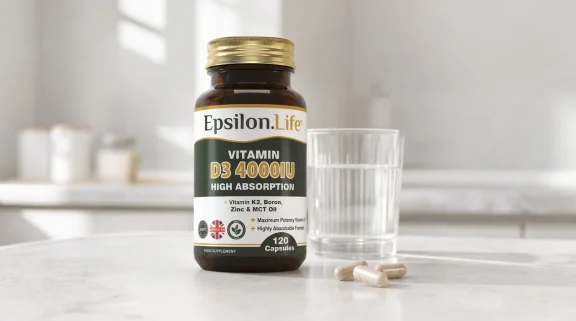
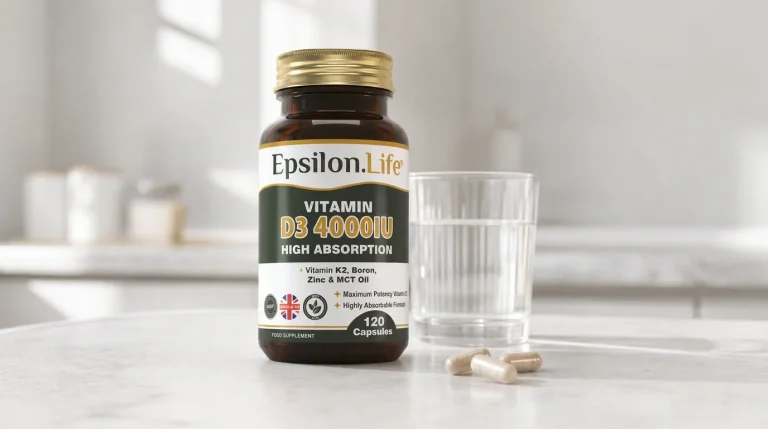
Take it with fat. Vitamin D absorbs significantly better alongside a meal containing fat. Some formulations take this further by building the fat carrier into the capsule itself. Our Vitamin D3 with K2 is formulated with MCT oil, so absorption support is built in rather than dependent on meal timing.
Look at the full formula. The same supplement also contains zinc, which supports vitamin D receptor function, and boron. Boron is worth a mention specifically here: research suggests it may inhibit CYP24A1, the liver enzyme responsible for inactivating vitamin D, potentially extending the time it stays active in your body. Where the drugs discussed earlier activate CYP enzymes and speed vitamin D breakdown, boron may do the opposite.
Make sure magnesium is adequate. Since magnesium is needed to activate vitamin D, a shortfall can leave your vitamin D status weaker than a blood test suggests. Our Magnesium Glycinate uses the bisglycinate form, which research suggests is better absorbed than cheaper forms such as magnesium oxide.
Talk to your GP if you take relevant medications. Anyone on long-term anticonvulsants, steroids, or rifampin should discuss vitamin D monitoring with their GP. The need for a higher dose is real and well-documented in this context.
FAQ
What depletes vitamin D most quickly?
Prescription drugs that induce CYP450 liver enzymes (particularly certain anticonvulsants, long-term corticosteroids, and rifampin) can significantly accelerate vitamin D catabolism. Among supplements, vitamin D2 is the main concern: a 2025 meta-analysis found it suppresses natural vitamin D3 levels even as it raises D2.
Does magnesium deplete vitamin D?
No. Magnesium is a cofactor for the enzymes that activate vitamin D. Low magnesium can impair vitamin D activation, but magnesium supplements do not deplete vitamin D. Taking magnesium alongside vitamin D may actually support better activation of whatever D3 you are taking.
Does calcium lower vitamin D levels?
No. Large clinical trials have not shown calcium supplements reducing vitamin D levels. The debate around calcium supplementation concerns cardiovascular effects and kidney stones, not vitamin D depletion.
Why are my vitamin D levels still low even though I supplement?
Several factors can keep levels low despite consistent supplementing: taking D2 instead of D3, an insufficient dose (particularly common in people with obesity), taking it without dietary fat, being on CYP-inducing medications, or inadequate magnesium impairing vitamin D activation.
Can boron help protect vitamin D levels?
Research suggests boron may inhibit CYP24A1, the enzyme that inactivates vitamin D, potentially slowing its breakdown. Some studies show higher 25(OH)D in people with adequate boron intake. It is a supportive consideration rather than a primary intervention, but relevant as part of a well-formulated vitamin D3 supplement.
This article is for general information and is not medical advice. Never stop or change a prescribed medication without speaking to your GP. Food supplements are not a substitute for a varied, balanced diet and healthy lifestyle. If you take prescription medication or have a health condition, speak to your GP or pharmacist before starting a new supplement.
References
- Nutrition Reviews (Oxford Academic). Effect of Vitamin D2 Supplementation on 25-Hydroxyvitamin D3 Status: A Systematic Review and Meta-Analysis of Randomized Controlled Trials. 2025. link
- Tripkovic L, et al. Comparison of vitamin D2 and vitamin D3 supplementation in raising serum 25-hydroxyvitamin D status: a systematic review and meta-analysis. American Journal of Clinical Nutrition. 2012. link
- Amrein K, et al. Vitamin D deficiency 2.0: an update on the current status worldwide. European Journal of Clinical Nutrition. 2020. link
- NIH Office of Dietary Supplements. Vitamin D Fact Sheet for Health Professionals. link
- Uwitonze AM, Razzaque MS. Role of magnesium in vitamin D activation and function. Journal of the American Osteopathic Association. 2018. link
- Naghii MR, et al. Comparative effects of daily and weekly boron supplementation on plasma steroid hormones and proinflammatory cytokines. Journal of Trace Elements in Medicine and Biology. 2011. link
Find our guides useful? Add Epsilon Life as a preferred source on Google to see more of them in your search results.
Add to Google preferred sources