


You’ve heard of probiotics. You’ve probably heard of prebiotics. Postbiotics are the third part of the equation — and arguably the least understood.
They’re also, in some ways, the most directly useful. While probiotics are the live bacteria and prebiotics are the fibre that feeds them, postbiotics are what those bacteria actually produce. They’re the functional output of a healthy, active gut microbiome.
What Are Postbiotics?
Postbiotics are bioactive compounds produced when gut bacteria ferment prebiotics (dietary fibre). The formal definition, established by the International Scientific Association for Probiotics and Prebiotics (ISAPP) in a 2021 consensus paper published in Nature Reviews Gastroenterology & Hepatology (Salminen et al., 2021), is: “a preparation of inanimate microorganisms and/or their components that confers a health benefit on the host.”
In practical terms, postbiotics include short-chain fatty acids (SCFAs), bacteriocins, enzymes, vitamins, and peptides produced during fermentation. The most studied are SCFAs — particularly butyrate, propionate, and acetate.
What Do Postbiotics Do?
Support the gut lining
Butyrate is the primary fuel source for colonocytes — the cells that line the large intestine. Without adequate butyrate, the gut lining becomes more permeable, a condition sometimes described as “leaky gut.” Research published in Gut (Donohoe et al., 2011) confirmed that butyrate is essential for maintaining colonocyte energy metabolism and gut barrier integrity.
A well-maintained gut lining is important for preventing inflammatory molecules and pathogens from crossing into the bloodstream. This has downstream effects on immune function, inflammation, and overall health.
Regulate the immune system
SCFAs, particularly propionate and butyrate, interact directly with immune cells in the gut and systemically. They help regulate the balance between pro-inflammatory and anti-inflammatory immune responses — a calibration that becomes increasingly relevant as we age.
Research in Nature Immunology (Furusawa et al., 2013) found that butyrate promotes the development of regulatory T cells (Tregs) in the gut, which are key for preventing excessive immune responses and reducing chronic inflammation.
Produce vitamins
Some gut bacteria produce vitamins as metabolic byproducts — including vitamin K2 and certain B vitamins, particularly B12. Propionibacterium freudenreichii, one of the strains in Biome Bliss, is one of the few gut bacteria known to produce B12 during fermentation — relevant for anyone over 40, where gastric acid production (and therefore B12 absorption from food) tends to decline.
Suppress harmful bacteria
Bacteriocins — antimicrobial compounds produced by probiotic bacteria — are a category of postbiotic that directly inhibit the growth of pathogenic bacteria. They work by disrupting bacterial cell membranes or interfering with cell wall synthesis, without the broad-spectrum disruption of antibiotics.
Prebiotics, Probiotics and Postbiotics: How They Connect
The three work in sequence rather than independently:
- Prebiotics (fibre from food) feed gut bacteria
- Probiotics (live bacteria) are the organisms doing the work
- Postbiotics are the compounds those organisms produce
This is why fibre intake matters so much for gut health. Without adequate prebiotic fibre, gut bacteria have little to ferment — and postbiotic production declines. A low-fibre diet doesn’t just reduce the variety of bacteria; it reduces the functional output of the microbiome.
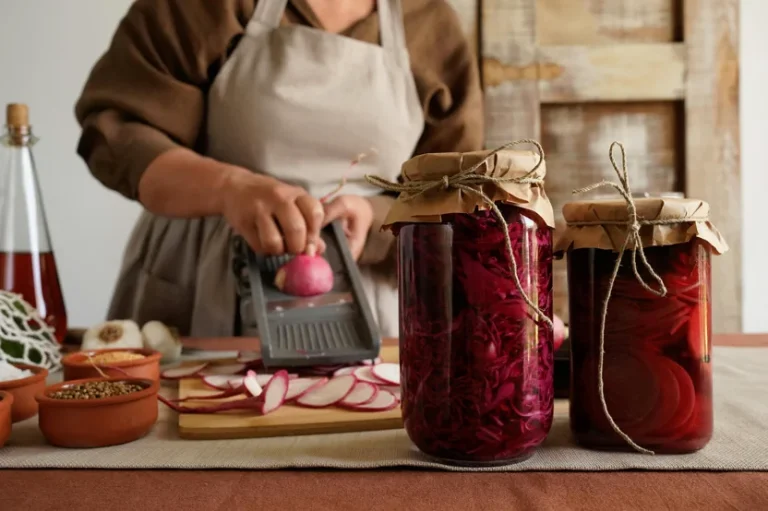
Fermented foods contribute postbiotics directly — the fermentation process produces SCFAs and other bioactive compounds before the food is consumed. This is one reason why research, including a 2021 study from Stanford University published in Cell (Wastyk et al., 2021), found fermented food diets to be more effective at improving microbiome diversity than high-fibre diets alone in the short term.
How to Increase Postbiotic Production
The most effective approach is dietary:
- Eat more fibre — particularly from diverse sources. Oats, legumes, garlic, onions, asparagus, and leeks are particularly good for feeding bacteria that produce butyrate.
- Include fermented foods — yoghurt, kefir, kimchi, sauerkraut, and kombucha provide postbiotics directly and support an environment that generates more.
- Diversify plant foods — different plants feed different bacterial species, which produce different postbiotics. Aiming for 30+ different plant foods per week supports broader postbiotic variety.
Postbiotic Supplements
Postbiotics are also available in supplement form, typically as concentrated butyrate or fermented formulations. The advantage of postbiotic supplements over probiotic capsules is stability — postbiotics don’t need to be kept alive, so they are more shelf-stable and reach the gut intact regardless of gastric acid levels.
A supplement that combines probiotics, prebiotics, and postbiotics together — delivered through a naturally fermented format — provides all three components in a single preparation. Biome Bliss is formulated this way: the multi-stage fermentation process produces postbiotics as part of the preparation itself, rather than adding them as isolated ingredients.
For more on the probiotic strains involved in postbiotic production, see our guide to the five strains in Biome Bliss.
Frequently Asked Questions
What are postbiotics made of?
Postbiotics are bioactive compounds produced when gut bacteria ferment dietary fibre (prebiotics). The most studied are short-chain fatty acids — butyrate, propionate, and acetate — but they also include bacteriocins, enzymes, vitamins, and various peptides produced during fermentation.
What is the difference between prebiotics, probiotics and postbiotics?
Prebiotics are the dietary fibre that feeds gut bacteria. Probiotics are the live bacteria themselves. Postbiotics are the compounds those bacteria produce during fermentation — including short-chain fatty acids that fuel the gut lining and regulate immune function. They work in sequence: prebiotics feed probiotics, which produce postbiotics.
What foods are high in postbiotics?
Fermented foods are the most direct source: yoghurt, kefir, kimchi, sauerkraut, miso, and kombucha all contain postbiotic compounds produced during fermentation. A high-fibre diet also supports postbiotic production by giving gut bacteria the material they need to ferment.
Are postbiotics better than probiotics?
They serve different purposes. Postbiotics are the functional end-products of microbial activity and are more stable than live probiotic cultures. For people who find probiotic supplements difficult to tolerate, postbiotics may be a useful alternative. Most evidence supports a combined approach — prebiotics, probiotics, and postbiotics together.
What does butyrate do?
Butyrate is a short-chain fatty acid and the primary fuel for the cells lining the large intestine (colonocytes). It is essential for maintaining gut lining integrity, reducing intestinal permeability, and regulating immune responses. Low butyrate production is associated with increased gut inflammation and a weakened gut barrier.
References
- Salminen S et al. (2021). The International Scientific Association of Probiotics and Prebiotics (ISAPP) consensus statement on the definition and scope of postbiotics. Nature Reviews Gastroenterology & Hepatology, 18(9), 649–667. pubmed.ncbi.nlm.nih.gov/34172569
- Donohoe DR et al. (2011). The microbiome and butyrate regulate energy metabolism and autophagy in the mammalian colon. Cell Metabolism, 13(5), 517–526. pubmed.ncbi.nlm.nih.gov/21531334
- Furusawa Y et al. (2013). Commensal microbe-derived butyrate induces the differentiation of colonic regulatory T cells. Nature, 504(7480), 446–450. pubmed.ncbi.nlm.nih.gov/24226770
- Wastyk HC et al. (2021). Gut-microbiota-targeted diets modulate human immune status. Cell, 184(16), 4137–4153. pubmed.ncbi.nlm.nih.gov/34256014
This article is for informational purposes only and does not constitute medical advice. Please consult a GP or registered healthcare professional before starting any new supplement.