


Lactobacillus rhamnosus GG — often abbreviated as LGG — holds a notable distinction: it was the first probiotic strain to be patented, back in 1985, and it remains one of the most studied probiotic organisms in the world. Thousands of clinical trials have investigated its effects across a range of conditions.
Not all L. rhamnosus products contain the GG strain, and not all strains behave identically. But the body of evidence built around LGG provides some of the most reliable data we have on what a well-researched probiotic can do.
What Is Lactobacillus rhamnosus?
Lactobacillus rhamnosus is a gram-positive, lactic acid-producing bacterium that colonises the human gut, particularly the small intestine. It was first isolated from the human intestinal tract by Drs Sherwood Gorbach and Barry Goldin at Tufts University — hence the GG designation — and has been the subject of clinical research ever since.
Its key structural advantage is strong adhesion to intestinal mucosa. L. rhamnosus GG binds to intestinal cells more effectively than many other strains, which means it persists longer in the gut, competes more effectively with pathogens, and maintains a presence during antibiotic treatment when other bacteria are being destroyed.
Benefits of Lactobacillus rhamnosus
Antibiotic-associated diarrhoea
This is the application with the most consistent evidence. Antibiotics disrupt the gut microbiome broadly, and diarrhoea is one of the most common side effects. L. rhamnosus GG has been shown to reduce the risk and duration of antibiotic-associated diarrhoea in multiple large trials.
A Cochrane review (Szajewska et al., 2019) covering 12 randomised controlled trials found that L. rhamnosus GG significantly reduced the risk of antibiotic-associated diarrhoea in children. Effect sizes were clinically meaningful, and the evidence quality was rated as moderate to high — relatively strong for the probiotic field.
Immune programming and allergy prevention
One of the most striking findings in L. rhamnosus research came from a landmark study published in The Lancet (Kalliomäki et al., 2001). High-risk infants given L. rhamnosus GG in the first months of life had nearly half the rate of eczema at two years compared to those given placebo. Follow-up studies tracked children to ages four and seven and found the protection partially persisted.
The mechanism is thought to involve early immune programming — L. rhamnosus GG interacts with developing immune cells in the gut and influences the balance between pro-inflammatory and regulatory immune responses. This is relevant not just for infants but as an illustration of how gut bacteria shape immune function throughout life.
Gut barrier support
L. rhamnosus GG has been shown to strengthen the tight junctions between intestinal epithelial cells, reducing gut permeability. Research published in the Proceedings of the National Academy of Sciences (Yan & Polk, 2011) identified a specific protein produced by L. rhamnosus GG — p40 — that activates a signalling pathway protecting intestinal cells from apoptosis (cell death) and reducing gut inflammation.
This mechanism is relevant to conditions involving gut permeability and chronic intestinal inflammation.
Vaginal microbiome health
L. rhamnosus — particularly strains GR-1 and RC-14 — is among the most studied probiotics for vaginal health. Oral supplementation with these strains has been shown to colonise the vaginal environment, produce lactic acid, and compete with bacteria associated with bacterial vaginosis and urinary tract infections.
A randomised trial in the FEMS Immunology & Medical Microbiology (Reid et al., 2003) found oral supplementation with L. rhamnosus GR-1 and L. reuteri RC-14 restored a normal vaginal flora in 82% of women compared to 35% in the placebo group.
Gut-brain axis and anxiety
Animal research from a team at University College Cork published in the Proceedings of the National Academy of Sciences (Bravo et al., 2011) found that mice fed L. rhamnosus JB-1 showed significantly reduced anxiety behaviour and altered GABA receptor expression in the brain — effects that disappeared when the vagus nerve was severed, confirming gut-to-brain communication as the mechanism. Human trials are underway but data is still limited.
Dosage and How to Take It
Most clinical trials use doses in the range of 1–10 billion CFU per day. The Cochrane review on antibiotic-associated diarrhoea used doses of 1–4 billion CFU daily with consistent effect.
For antibiotic-associated diarrhoea prevention, begin taking L. rhamnosus at the start of the antibiotic course and take it a few hours apart from antibiotic doses (unlike S. boulardii, bacterial strains are affected by antibiotics and should be spaced accordingly). Continue for at least two weeks after completing the course.
For general gut health support, once daily dosing is standard. L. rhamnosus GG survives gastric acid reasonably well but may benefit from being taken with a small amount of food to buffer stomach acidity.
Side Effects and Safety
L. rhamnosus GG has an excellent safety record in healthy adults and children across decades of clinical use. Mild, temporary bloating or gas when first starting is the most commonly reported side effect.
Immunocompromised individuals should consult a doctor before use, as with all live probiotic supplements.
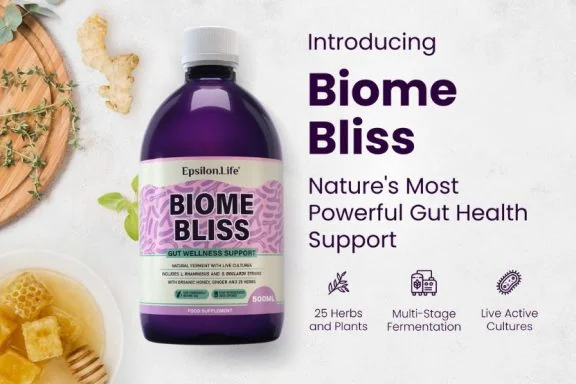
L. rhamnosus is one of the five strains in Biome Bliss. For an overview of all five strains and how they work together, see our probiotic strains guide.
Frequently Asked Questions
What is Lactobacillus rhamnosus GG used for?
L. rhamnosus GG has the strongest evidence for preventing antibiotic-associated diarrhoea. It also has good evidence for gut barrier support, immune programming (particularly eczema prevention in early life), and vaginal microbiome health. It is one of the most extensively researched probiotic strains available.
What is the difference between L. rhamnosus GG and other L. rhamnosus strains?
GG is a specific strain within the L. rhamnosus species, identified by its strong intestinal adhesion and extensively studied clinical profile. Not all L. rhamnosus products contain the GG strain — the strain designation matters when evaluating evidence. Other strains (GR-1, JB-1) have their own evidence bases for different applications.
Can I take L. rhamnosus with antibiotics?
Yes, but timing matters. Unlike S. boulardii (a yeast), L. rhamnosus is a bacterium and can be affected by antibiotics. Take it a few hours apart from your antibiotic dose to maximise survival. Continue for at least two weeks after finishing the antibiotic course.
How long does L. rhamnosus GG stay in the gut?
L. rhamnosus GG is transient — it does not permanently colonise the gut in most people. Studies suggest it is typically detectable for one to two weeks after supplementation stops. Consistent daily supplementation maintains its presence and effects.
Is Lactobacillus rhamnosus good for IBS?
The evidence for IBS specifically is mixed. Some studies show modest improvements in bloating and abdominal pain; others show no significant effect. L. plantarum has more consistent evidence for IBS symptom reduction. L. rhamnosus is better evidenced for diarrhoea-predominant IBS than for bloating-predominant symptoms.
References
- Szajewska H et al. (2019). Lactobacillus rhamnosus GG for treating acute gastroenteritis in children: updated meta-analysis of randomised controlled trials. Alimentary Pharmacology & Therapeutics, 49(11), 1376–1384. pubmed.ncbi.nlm.nih.gov/30977926
- Kalliomäki M et al. (2001). Probiotics in primary prevention of atopic disease: a randomised placebo-controlled trial. The Lancet, 357(9262), 1076–1079. pubmed.ncbi.nlm.nih.gov/11297958
- Yan F & Polk DB (2011). Characterization of a probiotic product from the intestinal epithelium indicates molecular mechanisms. Proceedings of the National Academy of Sciences, 108(12), 4490–4495. pubmed.ncbi.nlm.nih.gov/21368161
- Bravo JA et al. (2011). Ingestion of Lactobacillus strain regulates emotional behavior and central GABA receptor expression in a mouse via the vagus nerve. Proceedings of the National Academy of Sciences, 108(38), 16050–16055. pubmed.ncbi.nlm.nih.gov/21876150
This article is for informational purposes only and does not constitute medical advice. Please consult a GP or registered healthcare professional before starting any new supplement.