


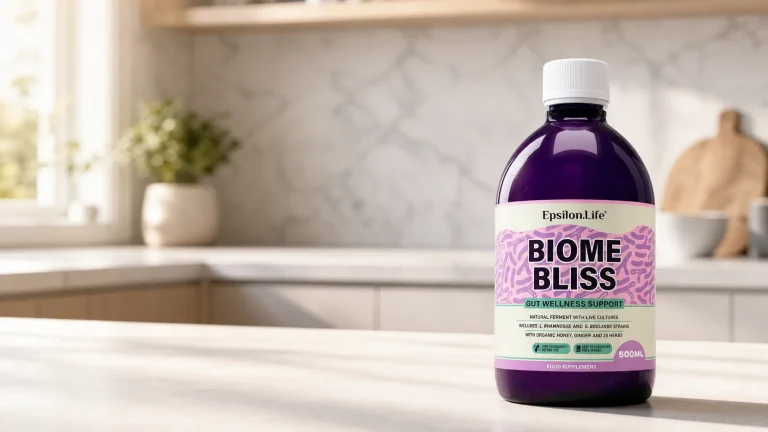
If you want the origin story behind Biome Bliss, why it was created, who it was created for, and what makes it different from standard probiotic capsules, our introductory article covers that in full.
This article does something different: it goes through every ingredient, explains the fermentation process in detail, and answers the questions we get asked most often about how the formula works.
Table of Contents
The fermentation base: organic honey and organic apple juice
Most fermented probiotic supplements use molasses or sugar cane as the fermentation substrate. These are cheap, readily available, and nutritionally inert. They serve as fuel for the fermentation process and little else.
Biome Bliss uses two different bases: fermented organic apple juice and fermented organic honey. Neither is an arbitrary choice.
Honey is a naturally antimicrobial substrate that, when fermented, creates an environment selectively favourable to the beneficial bacteria in the formula. Raw honey contains its own native microflora and bioactive compounds, including polyphenols, organic acids, and hydrogen peroxide-generating enzymes, that shape the fermentation in ways plain sugar substrates do not.
Apple juice contributes natural malic acid and a polyphenol profile that supports bacterial viability and adds functional complexity to the finished product.
The fermentation process: 8 to 10 weeks, unpasteurised
Biome Bliss ferments for 8 to 10 weeks. Commercial kombucha, itself considered a lengthy fermentation product, typically ferments for 1 to 4 weeks. The extended period allows the microbial community to fully establish and produce the complete range of fermentation byproducts: organic acids, short-chain fatty acids, B vitamins, and postbiotic compounds.
The finished product is not pasteurised. Pasteurisation kills bacteria, including the beneficial strains the fermentation was designed to produce. Biome Bliss is bottled unpasteurised, as kombucha and traditionally fermented foods are, meaning the bacteria are live and active at the point of consumption.
This is the fundamental difference from freeze-dried probiotic capsules. Encapsulated probiotics contain dormant, lyophilised bacteria that must survive stomach acid, rehydrate, and reactivate before colonising the gut. Biome Bliss presents active bacteria in a fermented matrix that buffers them through the stomach environment.

The six probiotic strains
Biome Bliss contains six clinically studied strains, selected for complementary mechanisms. A full breakdown of each is in our probiotic strains guide. The summary:
- Saccharomyces boulardii: a yeast-based probiotic that is naturally resistant to antibiotics. Clinical research on this strain is strongest for antibiotic-associated diarrhoea and for supporting gut recovery after H. pylori eradication therapy. See our dedicated S. boulardii article for the full evidence profile.
- Lactobacillus rhamnosus: one of the most researched bacterial probiotic strains. Strong evidence for reducing the duration of acute diarrhoea, supporting gut barrier integrity, and modulating immune responses in the gut.
- Lactobacillus casei: supports lactose digestion, studied for IBS symptom reduction and maintaining gut barrier function during antibiotic use.
- Streptococcus thermophilus: a classical yogurt fermentation bacterium. Produces lactase to support lactose digestion and contributes to gut lining integrity via short-chain fatty acid production.
- Lactobacillus plantarum: naturally present in sauerkraut and kimchi. Particularly studied for reducing bloating and gas, and for improving mineral absorption in the small intestine.
- Propionibacterium freudenreichii: rarely included in commercial supplements despite a strong evidence base. Produces vitamin B12 and propionic acid, and has demonstrated anti-inflammatory activity in gut tissue models.
The six strains address different compartments and mechanisms: bacterial balance, gut barrier integrity, immune modulation, and metabolic byproduct production. No single strain does all of this.
Prebiotics and postbiotics
Biome Bliss is not just a probiotic supplement. The fermentation process generates prebiotics, compounds that feed the beneficial bacteria already in your gut, and postbiotics, the bioactive metabolites produced during fermentation itself.
The postbiotics include short-chain fatty acids (propionic and acetic acid), organic acids from the bacterial strains, and polyphenol metabolites from the honey and apple juice base. These have independent effects on the gut lining and immune system, separate from the probiotic strains.
This is consistent with Stanford’s Human Food Project research showing that high-fermented-food diets increase microbiome diversity and reduce circulating inflammatory markers, an effect not replicated by high-fibre diets alone or by isolated probiotic capsules. The matrix matters, not just the bacterial count.
The benefits of a probiotic drink
A probiotic drink delivers live bacteria in liquid form, and that format is where most of the benefits of taking probiotics this way come from.
The first is bacterial state. A fermented drink presents bacteria that are already live and active, in a liquid matrix that buffers them through stomach acid. Freeze-dried capsule bacteria have to rehydrate and reactivate first.
The second is the supporting compounds. A fermented probiotic drink carries prebiotics and postbiotics alongside the live strains, not the strains in isolation.
The third is consistency. A daily drink is easy to build into a morning or evening routine, and the strains studied for gut barrier support, bloating, and digestion are only useful when taken regularly.
These are the principles Biome Bliss is built on: live bacteria, unpasteurised, in a fermented organic honey and apple juice base.
The botanical blend: organic ginger and 25 organic herbs and fruits
Alongside the probiotic strains and fermentation base, Biome Bliss contains organic ginger and a blend of 25 organic herbs and fruits.
Herbs: Anise, Fennel, Coriander, Peppermint, Lemon Balm Leaf, Caraway, Rooibos, Chamomile, Lemon Verbena Leaves, Sage, Rosemary, Thyme, Lavender, Marigold, Parsley, Rose, Hibiscus Flower
Fruits: Apple, Rosehip Shell, Blackberry, Elderberry, Raspberry, Strawberry, Sour Cherry, Lemon Peel
Ginger leads the botanical component for good reason. Gingerols and shogaols have been studied for their effects on the gastrointestinal tract, including gastric emptying, nausea, and smooth muscle in the gut wall. Ginger is one of the best-studied digestive herbs in clinical literature.
The herb blend covers several well-documented mechanisms. Carminatives (fennel, caraway, anise, peppermint) reduce gas and bloating by relaxing intestinal smooth muscle. Calming herbs (lemon balm, chamomile, lavender) support the gut-brain axis. Antioxidant-rich berries and botanicals (rosehip, elderberry, hibiscus, sour cherry) contribute polyphenols that support the gut lining and microbial diversity. The fruits also contribute natural polysaccharides that act as prebiotic substrates.
How to take Biome Bliss
Take 20 to 25ml once daily. The most effective timing is either first thing in the morning on an empty stomach, or before bed. Both work. The key is consistency rather than precise timing.
Biome Bliss mixes particularly well with herbal tea. Keep it warm rather than hot. Heat above around 40°C can reduce bacterial viability. It can also be taken neat or added to water.
If you are currently taking antibiotics: Saccharomyces boulardii is a yeast and is unaffected by antibiotic courses. The Lactobacillus strains are susceptible, so time them a few hours away from your antibiotic dose. If in doubt, check with your GP or pharmacist.
Each bottle provides approximately one month’s supply at the recommended dose.
Who it is for
Biome Bliss was formulated for adults over 40. Gut microbiome diversity tends to decline with age, and the downstream effects, including impaired immune function, reduced nutrient absorption, and more frequent digestive symptoms, become progressively more relevant with each decade.
It is particularly relevant for:
- Anyone currently taking or recently finishing a course of antibiotics
- People with regular bloating, gas, or unpredictable bowel habits
- Anyone who eats a low-fibre or repetitive diet and wants to support microbiome diversity
- People who want a fermented food-equivalent in supplement form without the daily kefir, kimchi, or kombucha habit
- Anyone who has tried probiotic capsules without consistent results
It is not a medical treatment for diagnosed gut conditions. If you have IBD, coeliac disease, SIBO, or are immunocompromised, speak with a gastroenterologist before starting any probiotic supplementation.
Frequently asked questions
Are fermented probiotic drinks actually good for gut health?
The evidence is stronger for fermented foods and beverages than for isolated probiotic capsules.
A 2021 randomised controlled trial from Stanford (Wastyk et al., Cell) found that a high-fermented-food diet significantly increased microbiome diversity and reduced 19 inflammatory proteins, an effect not matched by a high-fibre diet.
The key difference is that fermented products deliver live bacteria in a matrix of organic acids, postbiotics, and prebiotic compounds, rather than isolated freeze-dried cultures. Biome Bliss is built on this principle: live bacteria, unpasteurised, in a fermented organic honey and apple juice base.
What are the benefits of taking probiotics?
Probiotics are studied for supporting digestive balance, gut barrier integrity, and immune function in the gut. The evidence is strain-specific: Lactobacillus rhamnosus for gut barrier support, Lactobacillus plantarum for bloating and gas, and Saccharomyces boulardii for gut recovery during and after antibiotics. Responses vary between individuals, and format matters, since live bacteria in a fermented matrix deliver prebiotics and postbiotics alongside the strains, which isolated capsules do not.
How does Saccharomyces boulardii work?
S. boulardii is a yeast, not a bacterium, which gives it two important properties: it is naturally resistant to antibiotics, and it does not permanently colonise the gut.
Its mechanisms include producing proteases that neutralise bacterial toxins, stimulating secretory IgA (the gut’s primary immune defence), and restoring tight junction proteins in the gut lining disrupted by infections or antibiotic use.
The strongest clinical evidence is for reducing antibiotic-associated diarrhoea. See our S. boulardii article for a full review.
What are the benefits of Lactobacillus rhamnosus?
L. rhamnosus is one of the best-studied probiotic strains in clinical literature.
The evidence is strongest for reducing the duration and severity of acute diarrhoea, supporting gut barrier integrity by upregulating tight junction proteins, and modulating immune responses in the gut-associated lymphoid tissue.
It has also been studied for reducing the risk of respiratory infections, though this is less directly relevant to adult gut health supplementation.
What is the difference between probiotics, prebiotics, and postbiotics?
Probiotics are live microorganisms that confer a health benefit when consumed in adequate amounts.
Prebiotics are substrates, typically fibres and polyphenols, that selectively feed the beneficial bacteria already in your gut.
Postbiotics are the bioactive compounds produced by bacteria during fermentation: short-chain fatty acids, organic acids, enzymes, and cell wall fragments that have direct effects on gut health and immunity.
Biome Bliss contains all three: live bacterial and yeast strains (probiotics), fermentable substrates from the botanical blend (prebiotics), and the metabolites produced during the 8-10 week fermentation (postbiotics).
Why does Biome Bliss ferment for 8 to 10 weeks?
The extended fermentation, longer than the 1 to 4 weeks typical for commercial kombucha, allows the microbial community to fully establish and produce the complete range of metabolic byproducts: organic acids, short-chain fatty acids, B vitamins, and postbiotic compounds.
A shorter fermentation produces a less metabolically complete product. The 8-10 week process is what the patent behind the formula was built around, developed in partnership with a microbiologist and a leading EU fermentation expert.
Is Biome Bliss pasteurised?
No. Biome Bliss is unpasteurised, meaning the bacteria remain live and active at the point of consumption.
Pasteurisation kills bacteria, including the beneficial strains the fermentation was designed to produce. The same principle applies to traditionally produced kombucha and kefir.
This is why Biome Bliss requires refrigeration after opening, and has a shelf life determined by bacterial viability rather than sterilisation.
Can I take Biome Bliss while on antibiotics?
Yes, with a caveat.
The S. boulardii in the formula is a yeast and is naturally unaffected by antibiotics. This is one of the main reasons it is included. Clinical studies of this strain report a reduced risk of antibiotic-associated diarrhoea when taken concurrently.
The Lactobacillus strains are susceptible to antibiotics, so if you are mid-course, take Biome Bliss at least two hours away from your antibiotic dose.
What dose of Biome Bliss should I take?
20 to 25ml once daily.
Timing is flexible. First thing in the morning on an empty stomach or before bed are both effective. It mixes well with warm herbal tea (avoid temperatures above 40°C, which can affect bacterial viability).
One bottle provides approximately one month’s supply at the recommended dose.
How does Biome Bliss compare to probiotic capsules?
The key differences are format, bacterial state, and matrix.
Probiotic capsules contain freeze-dried dormant bacteria that must survive stomach acid, rehydrate, and reactivate. Biome Bliss contains live, metabolically active bacteria in a fermented liquid matrix that buffers them through the stomach environment.
The fermented base also delivers prebiotics and postbiotics alongside the probiotic strains, compounds absent from standard capsule products.
Why honey and apple juice rather than cheaper fermentation bases?
Molasses and sugar cane, used by most fermented supplement manufacturers, contribute nothing beyond fermentable sugars.
Organic honey brings native microflora, polyphenols, antimicrobial enzymes, and organic acids that actively shape the fermentation environment. Organic apple juice contributes natural malic acid and a polyphenol profile that supports bacterial viability.
The choice of substrate affects not just flavour but the quality of the fermentation and the complexity of the postbiotic output.
Is Biome Bliss suitable for people with IBS?
Several strains in Biome Bliss have been studied specifically in IBS populations. L. plantarum has the strongest evidence for reducing bloating and gas. L. rhamnosus and S. boulardii both have evidence for improving stool consistency and reducing symptom frequency.
The carminative herbs in the botanical blend (peppermint, fennel, caraway) are also traditionally and clinically used for IBS symptom relief.
That said, IBS responses to probiotics are highly individual. Starting with a smaller dose of 10ml for the first week is a practical approach if you have a sensitive gut.
Where can I buy Biome Bliss in the UK?
Biome Bliss is available directly from the Epsilon Life website and on Amazon UK.
Buying directly from Epsilon Life ensures you receive the freshest batch, as refrigerated storage from production to dispatch is maintained throughout the supply chain.
References
- Wastyk HC, Fragiadakis GK, Perelman D, et al. Gut-microbiota-targeted diets modulate human immune status. Cell. 2021;184(16):4137-4153. doi:10.1016/j.cell.2021.06.019
- McFarland LV. Systematic review and meta-analysis of Saccharomyces boulardii in adult patients. World Journal of Gastroenterology. 2010;16(18):2202-2222. doi:10.3748/wjg.v16.i18.2202
- Szajewska H, Kołodziej M. Systematic review with meta-analysis: Lactobacillus rhamnosus GG in the prevention of antibiotic-associated diarrhoea in children and adults. Alimentary Pharmacology & Therapeutics. 2015;42(10):1149-1157. doi:10.1111/apt.13404
- Ducrotté P, Sawant P, Jayanthi V. Clinical trial: Lactobacillus plantarum 299v (DSM 9843) improves symptoms of irritable bowel syndrome. World Journal of Gastroenterology. 2012;18(30):4012-4018. doi:10.3748/wjg.v18.i30.4012
- Vergalito F, Testa B, Cozzolino A, et al. Propionibacterium freudenreichii: a Promising Microorganism for the Production of Vitamin B12. Applied Sciences. 2020;10(5):1738. doi:10.3390/app10051738
- Bodiga VL, Bodiga S. Prebiotic Activity of Honey and Its Role in Modulating Gut Microbiota. Nutrition & Metabolism. 2014. doi:10.1155/2014/530709
- Borrelli F, Capasso R, Aviello G, Pittler MH, Izzo AA. Effectiveness and safety of ginger in the treatment of pregnancy-induced nausea and vomiting. Obstetrics & Gynecology. 2005;105(4):849-856. doi:10.1097/01.AOG.0000154890.47642.23
This article is for informational purposes only and does not constitute medical advice. If you are experiencing persistent digestive symptoms, have a diagnosed gut condition, or are immunocompromised, speak with your GP or a registered gastroenterologist before starting any probiotic supplementation.
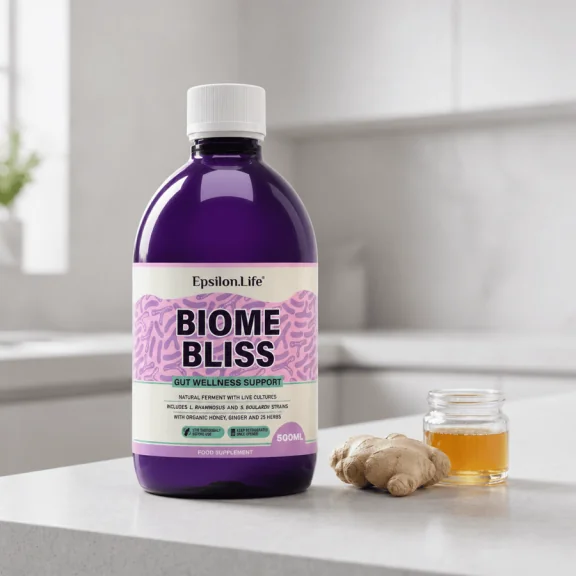
View Biome Bliss, naturally fermented, unpasteurised gut health supplement. Six probiotic strains, organic honey and apple juice base, 25 organic herbs and fruits, 8-10 weeks fermentation. Available from Epsilon Life and Amazon UK.
Find our guides useful? Add Epsilon Life as a preferred source on Google to see more of them in your search results.
Add to Google preferred sources